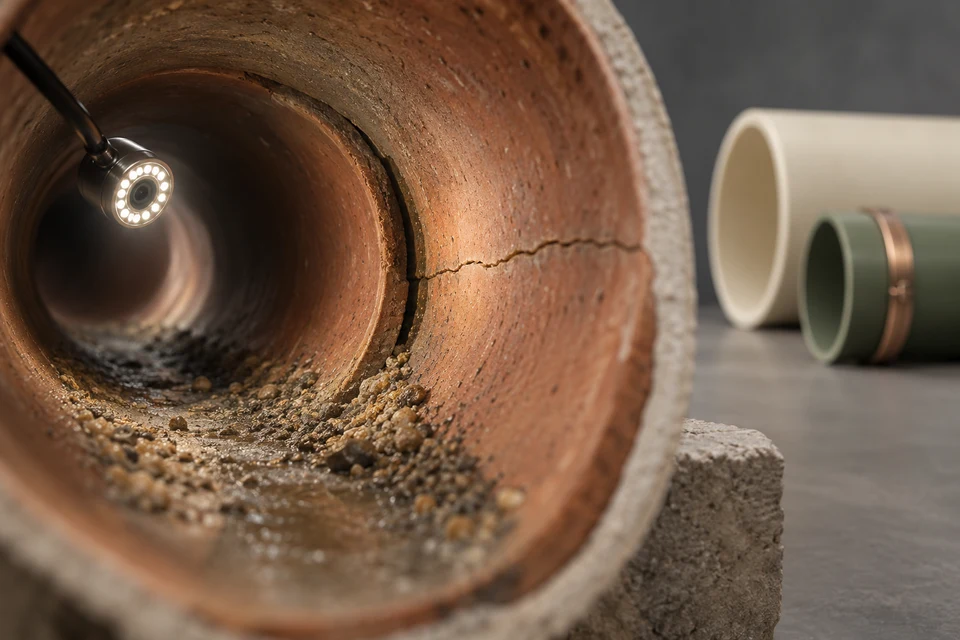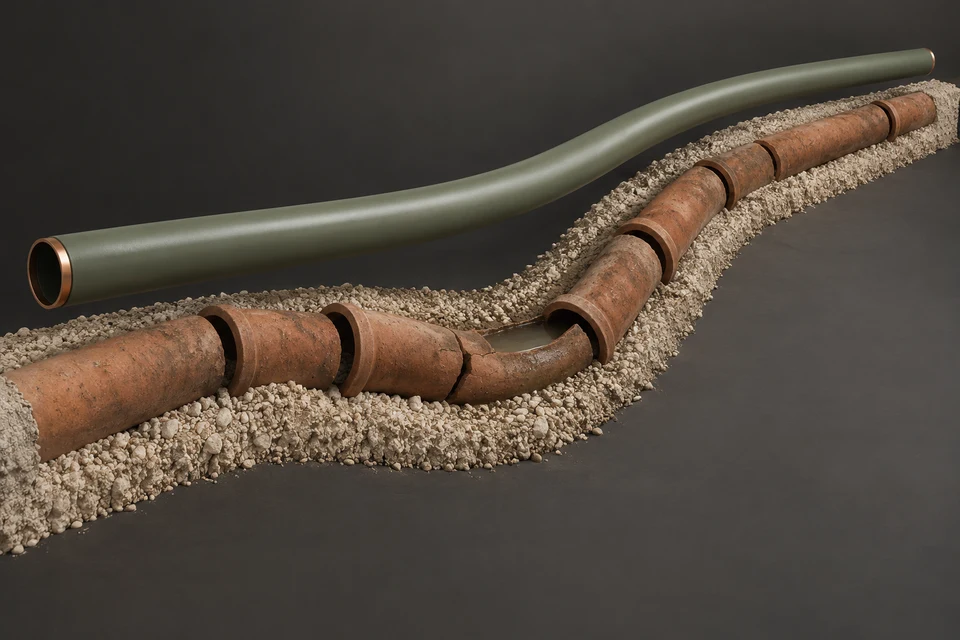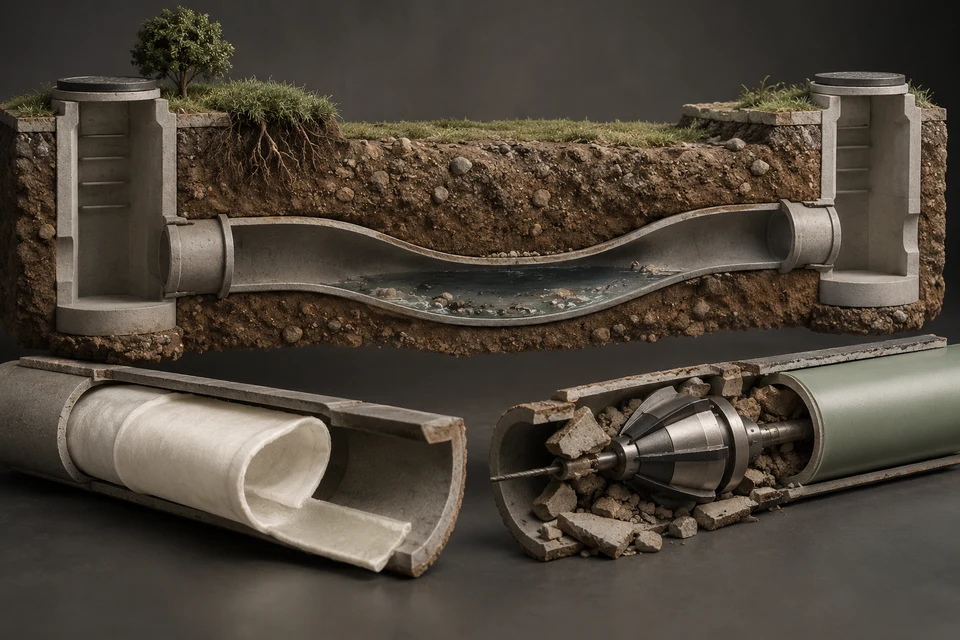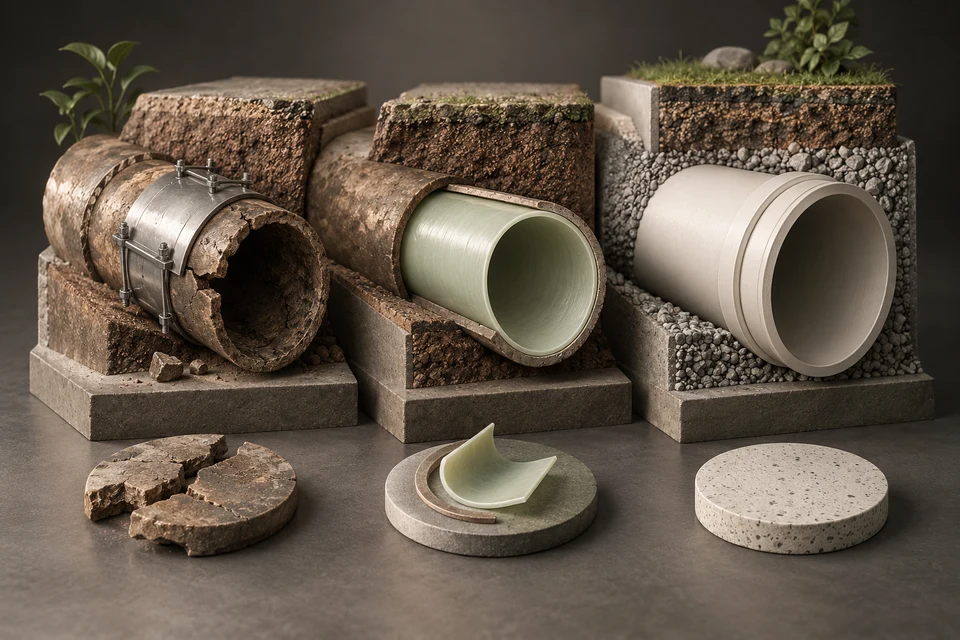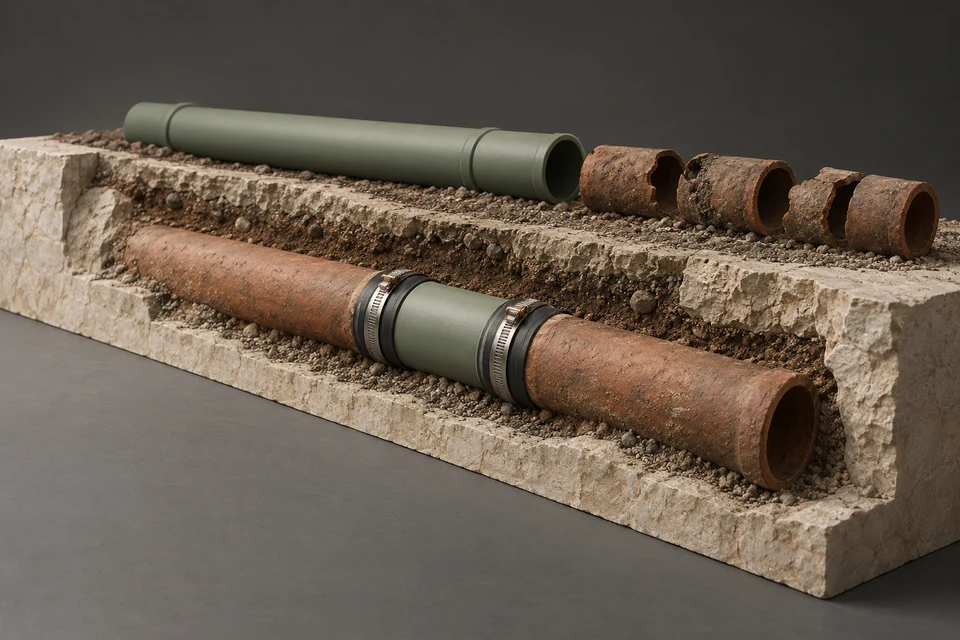
A spot repair is the right choice when the camera shows one, or at most two, isolated defects in pipe that is otherwise sound, such as a single offset joint or a cracked section. Once defects repeat along the run, the old material is near the end of its life, or a sag is involved, a full relining or replacement usually costs less over time.
- Count the structural defects and look at the pipe between them: the repair decision depends on both.
- A spot repair renews one location and leaves the rest of an old line exactly as old as it was.
- Two or three separate spot repairs can approach the cost of a full liner, with far less coverage.
- Joining new pipe to old clay or cast iron needs proper transition couplings and a firm bed.
- Repair tapes, putties and clamp sleeves are temporary fixes for exposed drain pipe, not buried sewers.
01 /What counts as a spot repair?
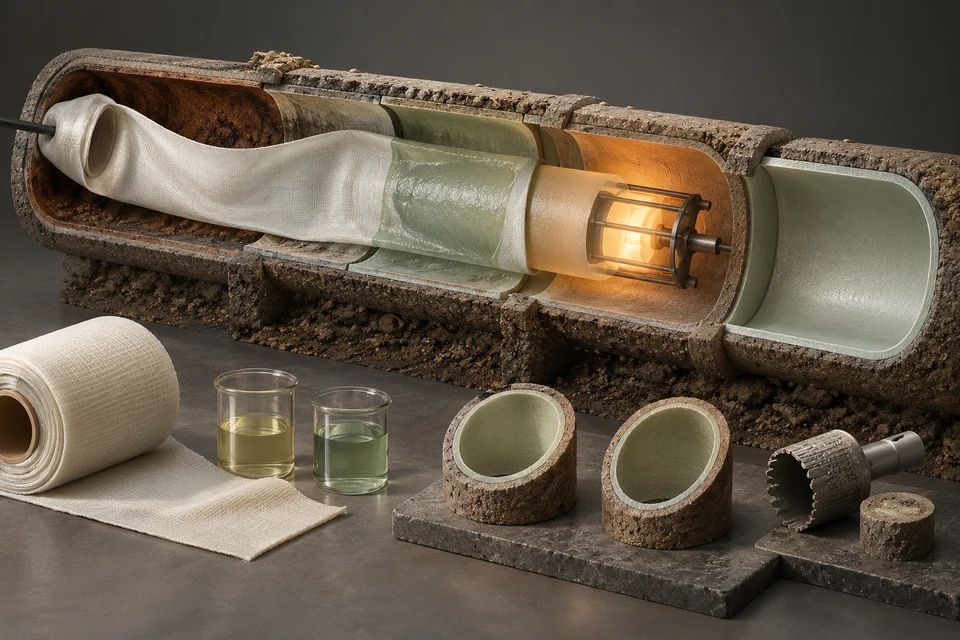
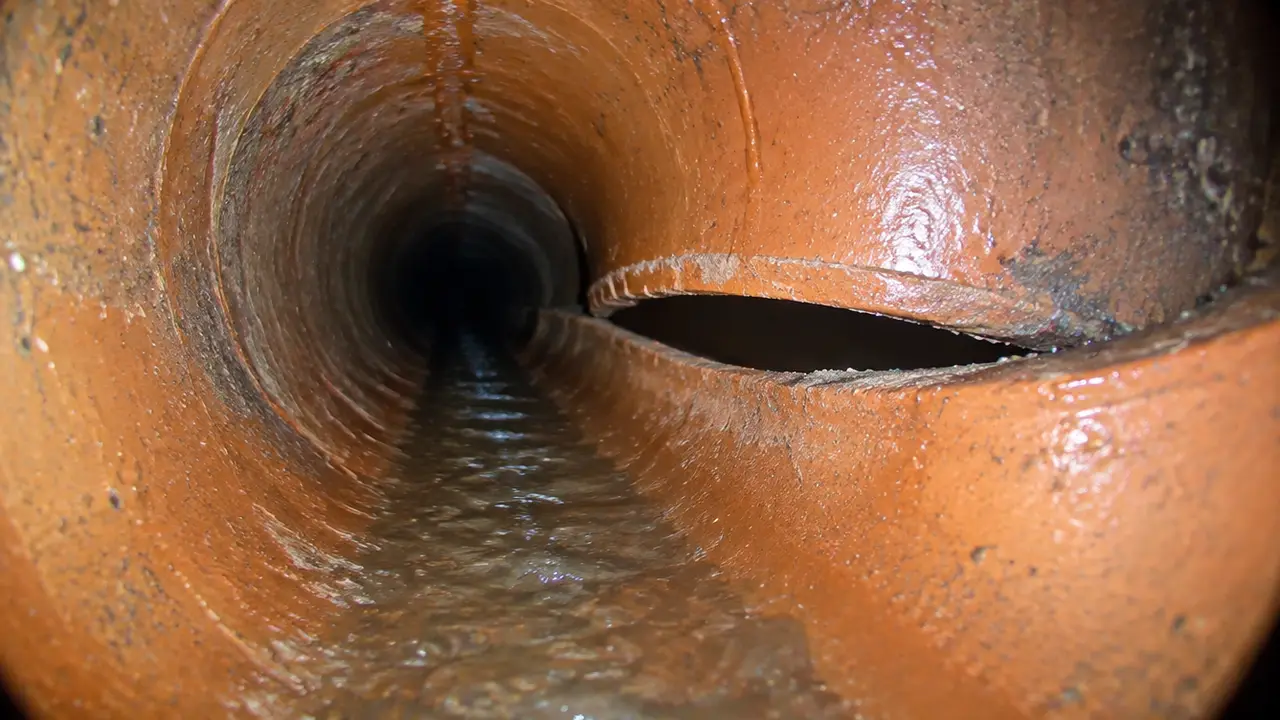
A spot repair (also called a point repair) fixes a single defect over a short length, typically a metre or two of pipe, without renewing the rest of the line. There are two ways to do it: dig down to the defect and replace the damaged section, or install a short cured-in-place sleeve from inside the pipe, known as a sectional or point liner.
02 /When is a spot repair enough?
A spot repair is enough when three conditions hold: the defect is isolated, the pipe between the access point and the main is otherwise sound on video, and the material has plenty of life left. A single root-damaged joint in a 1990s PVC lateral, damaged by a later excavation, is the textbook case.
- One offset or separated joint with the rest of the line tight.
- One cracked or broken length, for example where a fence post or utility dig struck the pipe.
- One short belly in otherwise sound pipe, repaired by excavation.
- A failed old repair, such as a loose rubber coupling, in a line that is otherwise good.
- A single root entry point in a plastic line, usually at a fitting or a transition to the old material.
This is how the decision engine treats it: when the extent is 'one spot' and there is no heavy scale, its verdict is spot repair, by dig or sectional liner.
03 /When does a spot repair stop making sense?
A spot repair stops making sense when you would be fixing the first of several similar defects, when the old pipe is at the end of its life, or when repair would leave a problem you already know about in place. The question to ask is not 'can this spot be fixed?' but 'what will fail next, and when?'
| What the footage shows | Leaning | Reasoning |
|---|---|---|
| One defect, rest of line sound and modern | Spot repair | Nothing else is likely to fail soon |
| One defect in an old clay line with roots at many joints | Full relining | Every joint is a future repair |
| Two defects several metres apart, both repairable | Compare two spot repairs against one full liner | The price gap is often smaller than expected |
| Three or more structural defects | Full relining or replacement | Repairs would cover most of the line anyway |
| Cast iron scaled and thinning throughout | Descale and reline, or replace | A patch leaves corroding pipe on both sides |
| Bituminous fibre anywhere | Replace | The material deforms along its length |
Fixing the worst joint in a line of bad joints buys you time, not a sewer.
For the money side of this comparison, including how repeated repairs add up against a single full-length fix, see repair vs reline vs replace cost and the method pricing on SewerQuotes.com.
04 /How is an excavated spot repair joined to old pipe?
The damaged section is cut out and replaced with new pipe, usually PVC or ABS, joined to the old pipe at each end with couplings designed for the two materials. Because a 100 mm clay or cast iron pipe and a 100 mm PVC pipe have different outside diameters, the coupling has to bridge that difference and hold alignment.
- Expose sound pipe beyond the defect
The dig must extend far enough to reach undamaged pipe at each end, which is sometimes further than the defect itself.
- Cut square and clean
The old pipe is cut cleanly with the right tool for the material, and loose fragments are removed so the coupling seats on a sound surface.
- Fit transition couplings
Shielded couplings, with a stainless steel shear band around a rubber sleeve, are commonly used to join different materials because the band resists the two pipes shifting out of line. Plain unshielded rubber couplings can let joints sag or offset.
- Bed and support
The new section is laid on compacted granular bedding so it cannot settle relative to the old pipe on either side.
- Inspect and record
Where a permit applies, the work is inspected before backfill. A camera run afterward shows both couplings aligned with no lip.
A spot dig is also the ideal moment to add a cleanout if the house does not have a usable one, which makes every future camera run and cleaning easier.
05 /How does a sectional liner work, and what are its limits?
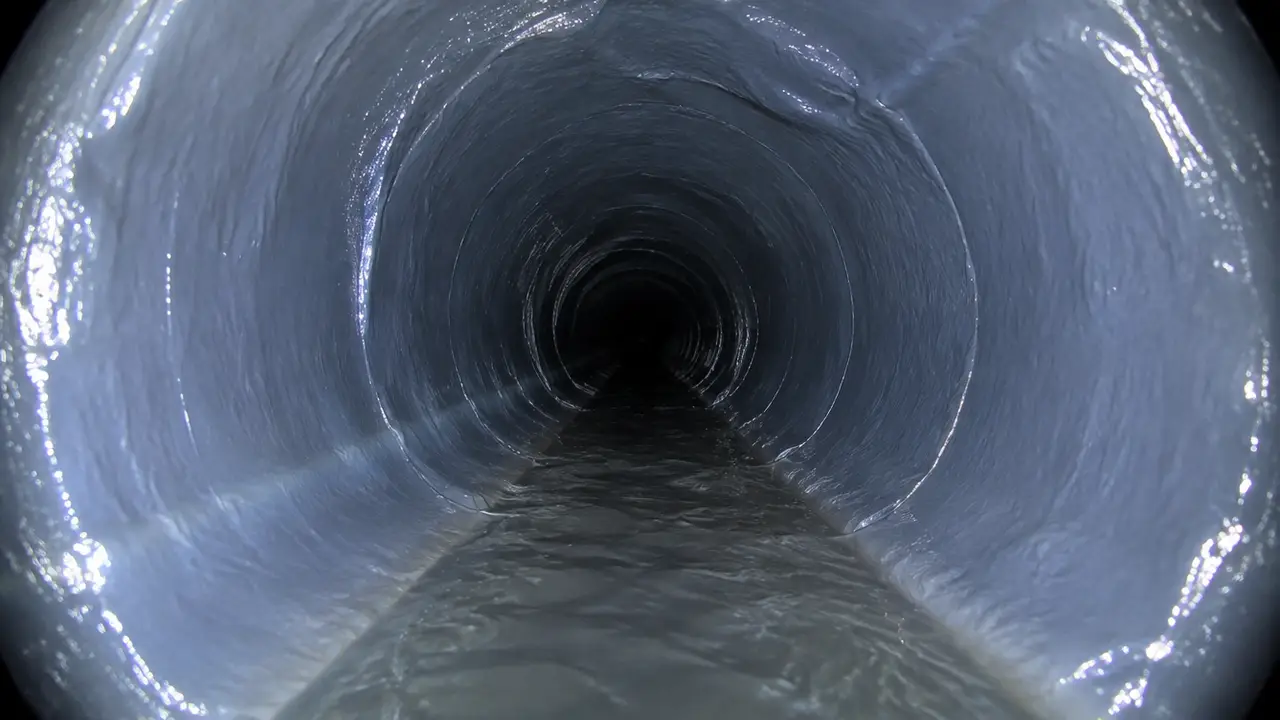
A sectional liner is a short length of resin-saturated fabric wrapped around an inflatable packer. The packer is pushed through the pipe to the defect, positioned using the camera and distance counter, then inflated to press the sleeve against the pipe wall until the resin cures. The packer is deflated and withdrawn, leaving the sleeve bonded in place.
- The host must be round enough for the sleeve to seat; a crushed or oval section will not hold a good repair.
- Offsets must be small, or the sleeve cannot bridge them without a fold.
- The pipe must be clean at the defect: roots and scale are cut out first.
- Sectional liners have ends. Each end is a transition where roots can later push in if the pipe beyond is still open at its joints.
- They cannot fix grade. A sleeve in a belly is a sealed belly.
Several sectional liners can be installed in one visit, which makes them a middle path for a line with two or three separate defects. Beyond that, a full-length liner is usually simpler and leaves no joints at all. CIPP lining explained covers the full-length version.
06 /Do pipe repair tapes, epoxy putty or repair sleeves work on a sewer line?
Not on a buried sewer. Repair tapes, epoxy putties and rubber clamp sleeves sold for home use are designed for pipe you can reach and see, such as a cracked ABS drain in an unfinished basement. They can stop a drip for a while, but they are not structural, they rarely meet code as a permanent repair, and they do nothing for a lateral under the yard.
| Product | Reasonable use | Not suitable for |
|---|---|---|
| Self-fusing silicone or rubber repair tape | Short-term fix on a weeping exposed drain joint | Pressurised lines, cracks under load, buried pipe |
| Epoxy putty | Temporary patch on a small crack in exposed pipe | Joints that move, wet surfaces, permanent code repair |
| Clamp-style repair sleeve or band | Holding an exposed crack until the section is replaced | Buried laterals, cracked fittings, long splits |
| Fibreglass resin wrap kits | Temporary reinforcement of accessible pipe | Anything you cannot inspect afterward |
The permanent fix for a cracked interior drain pipe is to cut out the damaged section and install new pipe and fittings of an approved type, with an approved transition coupling where two different plastics or metals meet. In most places that work also needs a plumbing permit. If the crack is on the building drain or stack and you are not sure how far the damage runs, have it cameraed before patching.
07 /What warranty comes with a spot repair?
Usually a warranty that covers only the repaired section and its couplings, not the rest of the line. That is fair, since the contractor did not renew the rest, but it means a spot repair on an old clay or cast iron line leaves you uncovered for everything outside the pit.
- Ask for the warranty in writing, stating the length of pipe covered and the distance from the access point.
- Ask whether it covers the repair only, or also the surface restoration above it if the pit settles.
- Ask what happens if a defect appears a metre past the repair: is that a new job at a new price?
- Keep the before and after videos so any future claim can be tied to the right location.
More detail on what to get in writing is in sewer replacement warranties and final checks. If you want contractors to price both a spot repair and a full-length option on the same footage, request quotes and say so in your scope.
FAQQuestions people ask
Is it better to repair or replace a sewer line?
Repair when there is one isolated defect in otherwise sound pipe. Replace or reline when defects repeat along the run, the material is failing throughout, or the line has lost its grade in several places.
What is a sectional point repair?
A short cured-in-place sleeve installed from inside the pipe with an inflatable packer, bonded over a single defect. It avoids digging but cannot fix sags or crushed pipe.
How long does a spot repair last?
The new section itself can last as long as a new pipe. The weakness is the old pipe on either side, which keeps ageing. Spot repairs in modern pipe tend to hold up well; in old clay, the next joint may fail.
Can I fix a cracked sewer pipe with epoxy or tape?
Only temporarily, and only on exposed pipe you can see. Buried sewers and permanent repairs need the damaged section replaced with approved pipe and fittings, usually under a permit.
What is the best drain pipe repair sleeve?
For buried sewers, the professional equivalent is a sectional cured-in-place liner. For exposed interior pipe, clamp sleeves are only a stopgap until the section is replaced with approved fittings.
NETWORKGo deeper across the HAUSE Sewer network
How long cast iron drain pipes last, and when to repair, line or replace
How long do cast iron drain pipes last? Why they rust and crack, how to judge remaining life, and when a repair sleeve, lining or replacement is right.
SewerInspector.caShould you scope the sewer before buying a house?
When a sewer scope before buying a house is worth it, which homes need one most, how to fit it inside a condition period, and what to do with the result.
SewerQuotes.comSewer line repair cost: what a spot repair should cost
Sewer line repair cost in Canada for 2026: spot repair and sectional liner planning ranges in CAD, what drives the price, and when a repair beats full replacement.