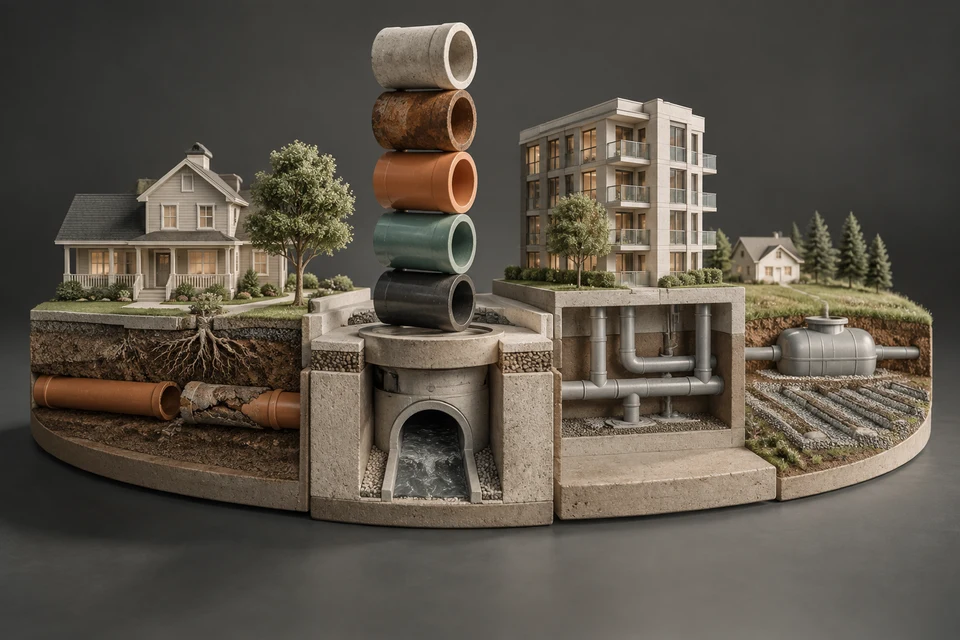
Sewer line replacement renews the pipe between a house and the municipal main by open cut, relining or pipe bursting. Whether you need it depends on recorded camera footage, not age alone. The method depends on the defect, grade, depth and surface. Owners usually pay for the private side; confirm the boundary with your municipality, and get quotes on the same footage.
- Camera footage decides whether to repair, reline or replace.
- Trenchless methods cannot fix a sag; only excavation corrects grade.
- Most insurance covers backup damage inside the house, not the pipe, unless you carry service line coverage.
- Permits, locates and an inspection apply to almost every replacement.
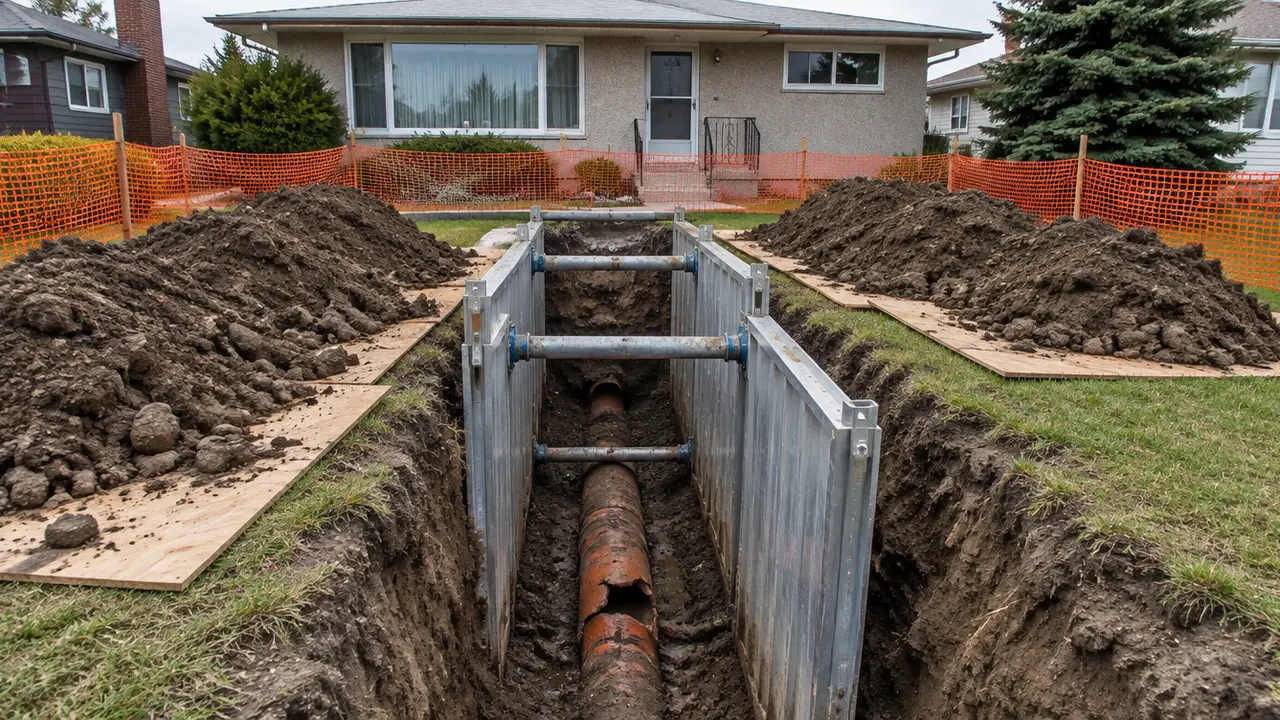
01 /Quick answers about sewer line replacement
These are the questions Canadians most often type into search boxes and ask assistants about replacing a sewer line. Each answer is short and self-contained, with a link to the page that covers it in depth. If your question is about a specific finding on a camera report, start with the Repair or Replace? Decision Engine; if it is about which method fits your yard, use the Replacement Method Selector.
| Topic | Go to |
|---|---|
| Whether to replace | When to replace a sewer line |
| Which method | Sewer replacement methods compared |
| Which pipe | Best pipe for sewer replacement |
| What it costs | Repair vs reline vs replace cost |
| How the job runs | Sewer replacement day by day |
| Insurance and claims | Does insurance cover sewer line replacement? |
| Permits and inspections | Sewer line replacement permits and inspections |
| Cast iron, clay or Orangeburg | Replacing old sewer pipe by material |
| Driveways, trees and landscaping | Replacing a line under a driveway or near trees |
| Condos, shared laterals and rentals | When more than one owner is involved |
| Septic systems | Replacing the line to a septic tank |
| Calgary specifics | Sewer line replacement in Calgary |
FAQAll questions
What is sewer line replacement?
Renewing the pipe that carries sewage from a house to the municipal main or a septic tank along its whole length, by digging a trench and laying new pipe, by pipe bursting, or by relining the old pipe with a structural liner.
What is the difference between sewer line repair and replacement?
A repair fixes one location, by a small dig or a sectional liner, and leaves the rest of the old line in service. Replacement or full relining renews the whole line, so the old joints and weak spots are gone end to end.
How do I know if my sewer line needs to be replaced?
A recorded camera inspection is the evidence. Collapse, deformed or fibre pipe, fractures or holes along much of the line, a belly holding water, or roots at most joints of an old clay line usually justify replacement or relining. See when to replace a sewer line.
When should the main sewer line be replaced?
When the footage shows widespread structural damage, when maintenance can no longer keep it flowing, or before building something expensive over a failing old line. Age alone is not enough, though lines of 70 years or more deserve a full-length option in every quote.
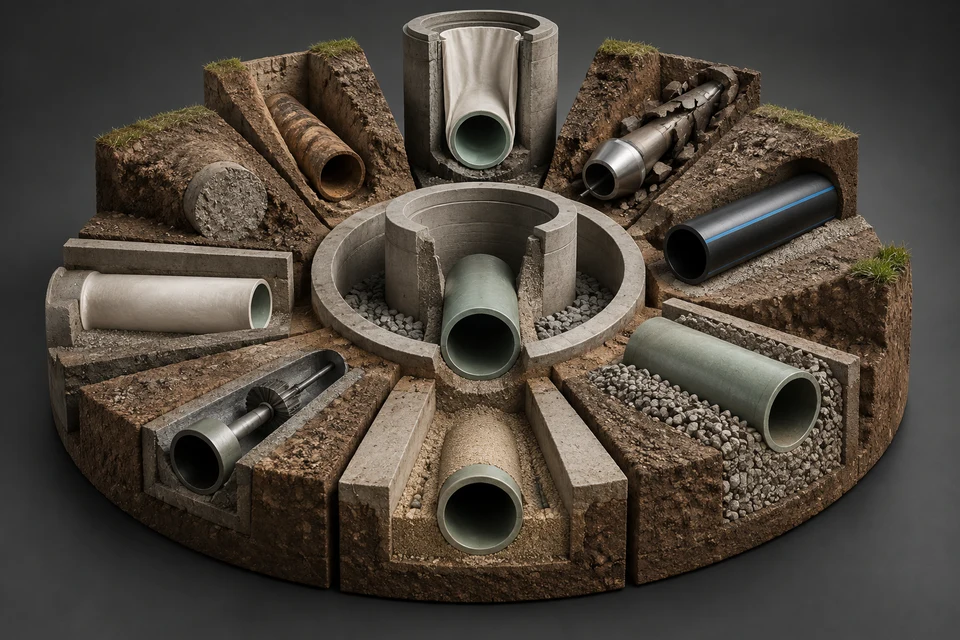
What are the options for sewer line replacement?
Open-cut excavation, full-length CIPP relining, pipe bursting, and, for single defects, excavated spot repairs or sectional liners. Guided boring along a new path is used occasionally. The defect, grade, depth and surface decide which fit.
What is trenchless sewer replacement?
Renewing a sewer from access points instead of a full trench: either curing a new liner inside the old pipe, or bursting the old pipe while pulling a new HDPE pipe into its place. See how trenchless sewer replacement works.
Is trenchless sewer replacement a good idea?
Yes, where the old pipe still holds its grade and the ground above it is expensive to disturb: a driveway, mature trees or finished landscaping. It is the wrong choice for a sag, and lining is wrong for a collapsed or deformed pipe.
Can trenchless repair fix a belly in the sewer line?
No. A liner copies the dip and bursting follows the old path. The sagging section must be excavated, re-bedded and re-laid on grade. The rest of the line can often still be lined.
What is the best pipe to use for a sewer line?
For an open-cut house lateral, gasketed PVC sewer pipe such as SDR 35 or SDR 28 on proper bedding is the usual choice. Fused HDPE is standard for bursting. ABS or PVC DWV suits the building drain under the slab.
How many days does a sewer line replacement usually take?
Typically one to three days on site for open cut, about a day for lining, one to two days for bursting and about a day for a spot repair, once permits and locates are in place. Restoration can follow later, especially in winter.
What lifespan can I expect from a trenchless repair?
Burst replacements are new HDPE pipe with a long design life. CIPP liners are commonly designed for around 50 years. Installation quality, preparation and end seals decide the real life.
Can I replace my sewer line myself?
Possibly on the private side, where your municipality issues homeowner permits. The municipal connection usually requires approved contractors, and trench safety, locates and inspection always apply. Many owners handle preparation and restoration instead.
Does the city replace sewer lines?
Municipalities maintain the mains and, in many Canadian cities, the lateral from the property line to the main. The owner usually handles the private side. Rules differ between cities, so confirm with yours; in Calgary, call 311.
Does home insurance cover sewer line replacement in Canada?
Usually not the pipe itself. Sewer backup endorsements typically cover damage inside the house. Some insurers offer separate service line coverage that can pay for repairing the pipe. Ask your broker what your policy says.
Is sewer line replacement tax deductible in Canada?
For your own home, generally not. For a rental property, the Canada Revenue Agency distinguishes current expenses from capital expenses, and a replacement can fall on either side depending on the facts. Get advice from an accountant.
Does replacing a sewer line increase home value?
It seldom adds value dollar for dollar, but it removes a risk buyers and their inspectors look for in older homes. A permit record, a finished-line video and a written warranty make the work visible to a buyer.
What does it cost to replace a sewer line, roughly?
As 2026 planning ranges in CAD, open-cut replacement of a 15 to 25 m lateral typically quotes about $12,000 to $35,000 or more, relining about $9,000 to $28,000 and bursting about $10,000 to $30,000. See the cost page and SewerQuotes.com.
Why is sewer line replacement so expensive?
Because most of the cost is getting to the pipe and restoring the surface: deep excavation with trench protection, work around utilities, the municipal connection, permits, equipment and rebuilding lawns, driveways or landscaping. The pipe itself is a small share.
Can you finance sewer line replacement?
Many owners use contractor payment plans, lines of credit or home equity. Tie payments to milestones, keep the final payment until the finished-line video is delivered, and compare borrowing costs before signing.
How is a sewer line under a basement slab replaced?
Usually by saw-cutting a trench in the floor, replacing the drain with ABS or PVC on compacted bedding, testing and inspecting it, then re-pouring the concrete. A round pipe on grade can sometimes be lined instead.
What happens to the old sewer pipe?
Open cut removes it; lining leaves it as the host around the new liner; bursting leaves it in fragments in the soil. A line that is rerouted is abandoned: disconnected, capped at both ends and recorded.
Is a permit required for sewer line replacement?
In most Canadian municipalities, yes: a plumbing permit and an inspection before backfill, plus permission for any work on the boulevard or road. Your contractor usually applies. Confirm with your municipality.
Can I stay in my house during sewer replacement?
Usually. The main disruption is drainage: you cannot use water that drains to the line while it is open, being lined or being burst. Ask for the no-use window in writing.
Who does sewer line replacement?
Plumbing contractors with excavation crews, drain companies that do replacement themselves or through partners, trenchless specialists and underground utility contractors. Ask who does each part and whose warranty covers it.
Does sewer backup insurance pay to fix the sewer pipe itself?
No. Sewer backup coverage pays for cleanup and damage inside the house after a backup. Repairing the buried lateral is covered only by a separate service line endorsement, and only if it was in place before the failure.
Can a sewer line under a driveway be renewed without breaking the concrete?
Often. Relining works from a cleanout when the pipe is round and on grade, and bursting needs only a pit at each end. A sag or collapse still needs excavation, usually a saw-cut strip rather than the whole driveway.
What is the usual fix for Orangeburg sewer pipe?
Replacement, by pipe bursting or open cut. Bituminous fibre pipe softens and deforms with age, and a liner would take on that deformed shape, so relining is generally not suitable once the pipe has gone oval.
Who replaces a sewer line that serves a condominium building?
Usually the condominium corporation, when the line is a common element under the declaration, as drains serving several units and the building sewer typically are. Unit owners should report problems in writing to the board or manager.
Can the pipe to a septic tank be replaced without replacing the tank?
Yes, when the tank and disposal field are sound. Have the tank pumped and inspected first to confirm the pipe is the problem, protect the inlet baffle during the connection, and get the permit your local authority requires.
What warranty should come with a new sewer line?
A written workmanship warranty from the contractor stating the metres covered, the years, exclusions and transferability, plus the manufacturer's material warranty for the pipe or liner. Tie it to the finished-line video.