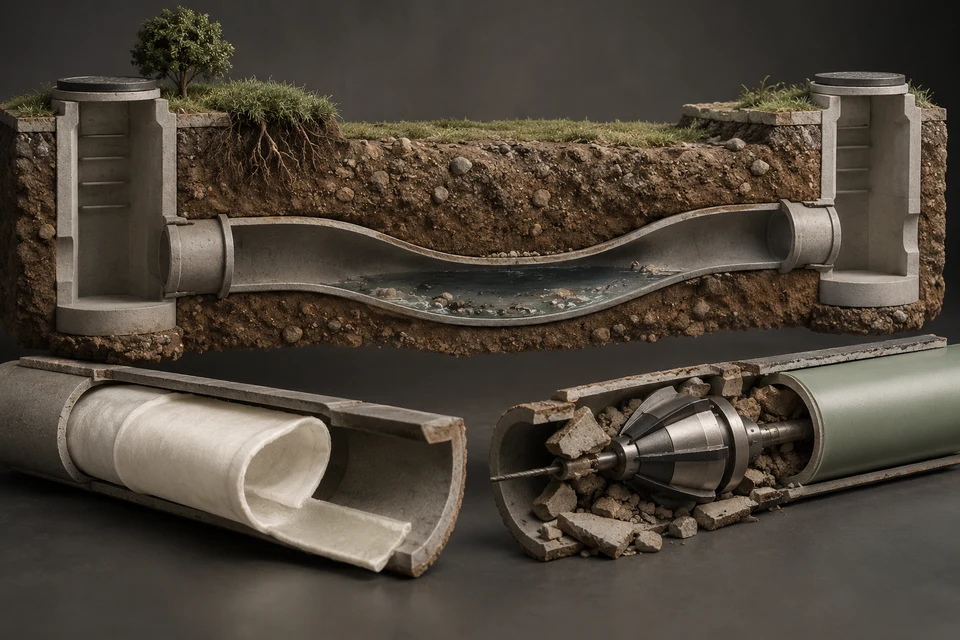
A standard Canadian home policy rarely pays to replace the sewer pipe itself, because worn, corroded or root-damaged pipe is treated as deterioration rather than a sudden loss. Optional sewer backup coverage pays for damage inside the house, not the lateral. Only a separate service line endorsement, where you bought one before the failure, may pay toward digging up and repairing the buried pipe.
- Insurance and the engineering decision are separate questions: decide repair, reline or replace from the footage, then ask what the policy pays toward it.
- Sewer backup coverage pays for water and sewage damage inside the house; it does not renew the pipe that caused it.
- Service line coverage is a distinct endorsement that can pay toward excavating and repairing buried lines, up to its own per-incident limit.
- The cause of failure, sudden or gradual, usually decides whether any part of a claim is accepted.
- Call the insurer before permanent work starts, and keep the video, photos and any removed pipe until the adjuster is finished.
01 /Does a standard home policy pay to replace a sewer line?
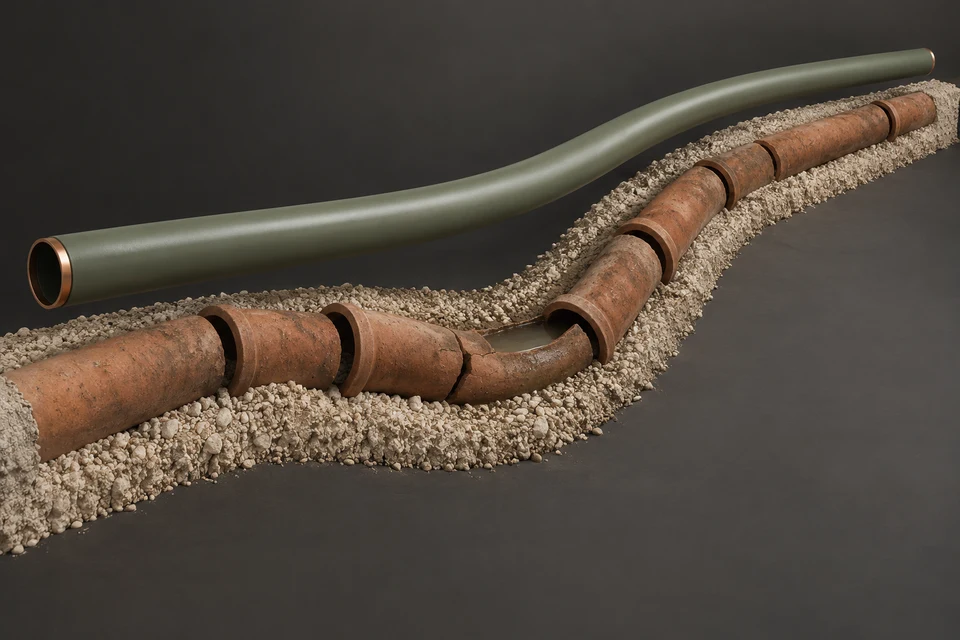
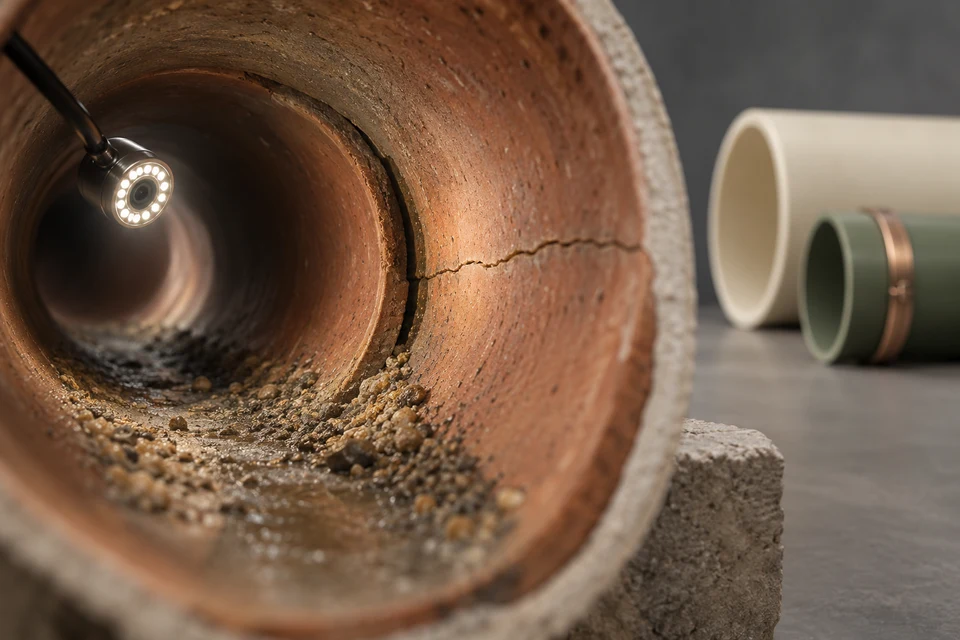
Usually not. Canadian home policies are written to cover sudden and accidental loss, and a sewer lateral that has cracked, corroded, sagged or filled with roots over decades is, in insurance terms, wearing out. The Insurance Bureau of Canada describes gradual deterioration as natural and expected, and therefore not an insured peril. A clay pipe whose joints have opened is exactly that kind of deterioration.
Two other features of a typical policy work against a pipe claim. First, the pipe sits outside the dwelling and underground, while standard water damage wording is aimed at water escaping from indoor plumbing, heating or appliances. Second, sewer backup is excluded from standard coverage unless you have bought the optional endorsement. So a homeowner can have a comprehensive policy and still find that neither the cleanup nor the pipe is covered.
| Coverage | Usually pays toward | Usually does not pay for |
|---|---|---|
| Standard home policy, no endorsements | Sudden escape of water from indoor plumbing or appliances | Sewer backup damage, the buried lateral, deterioration, roots |
| Optional sewer backup endorsement | Cleanup, decontamination, damaged finishes and contents after a backup | Repairing or replacing the pipe that backed up |
| Optional service line endorsement | Excavating and repairing a failed buried line on your property, to a per-incident limit | Work beyond the limit, lines off your property, failures before the coverage began |
| Contractor warranty | Defects in the work that contractor installed | The rest of an old line, or damage caused by other trades |
| Municipal responsibility | Defects in the municipal portion, where the municipality owns it | The private side of the lateral |
02 /What does sewer backup coverage actually pay for?
Sewer backup coverage pays for the consequences of sewage or water coming up through floor drains, toilets and fixtures: extraction, cleaning and disinfection, drywall and flooring removal, and damaged belongings, subject to the limit and deductible on your declarations page. The Insurance Bureau of Canada notes that most insurers offer it as an option and that it is often sold together with optional overland flood coverage.
What it does not do is fix the cause. If a root mass in your clay lateral caused the backup, the endorsement may pay to clean the basement, and the root mass is still in the pipe the next morning. Owners sometimes read a paid backup claim as proof that the insurer has taken responsibility for the line, and are surprised when a second claim meets questions about why the pipe was never repaired.
03 /What is service line coverage, and will it pay for the pipe?
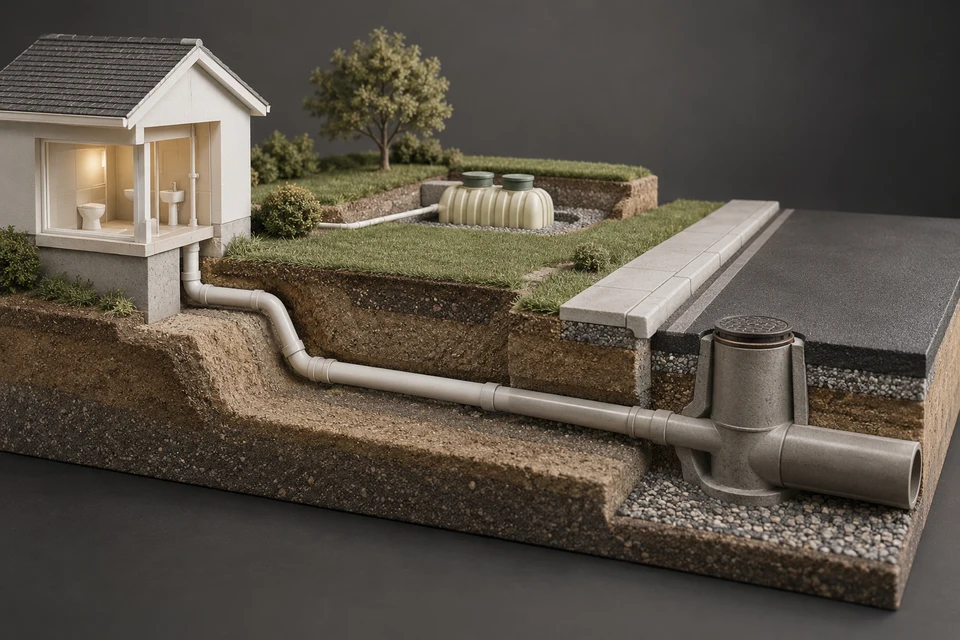
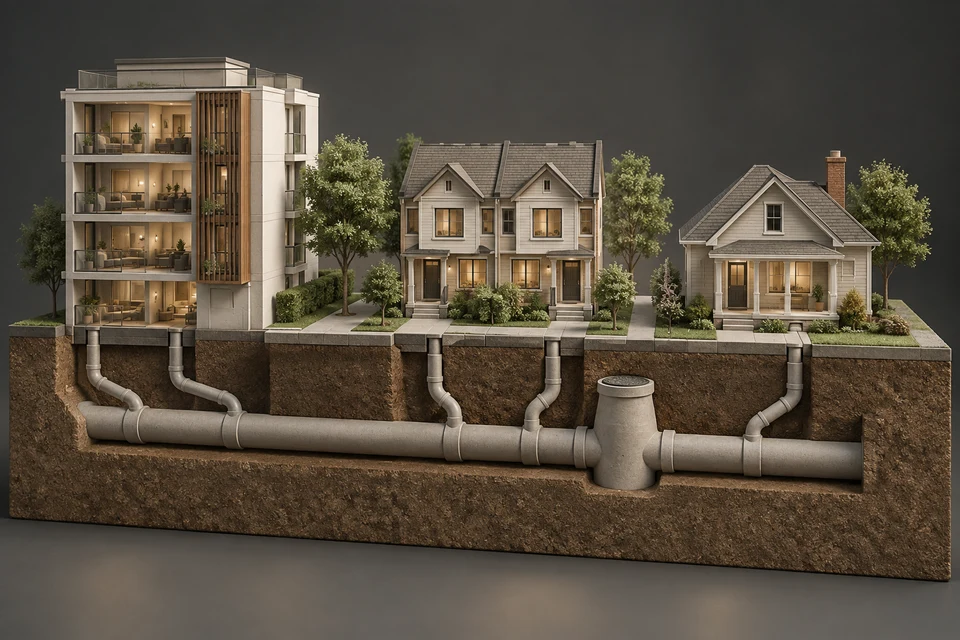
Service line coverage is an optional endorsement, sold by a number of Canadian insurers, that extends a home policy to the buried lines serving the house: typically the water service, the sewer lateral on your property, and sometimes buried power, communication or geothermal loop lines. Unlike a standard policy, it is written for the failures buried pipes actually suffer, and product descriptions commonly list root intrusion, deterioration, freezing and collapse among the covered causes.
Where it applies, it may pay toward locating the break, excavating, repairing or replacing the failed section, and in some products restoring landscaping, walks or driveways disturbed by the work, along with additional living expenses. Each product sets its own per-incident limit, and that limit can be lower than the quote for a full-length replacement under a driveway. Treat it as a contribution to the job, not a promise to fund whatever method a contractor proposes.
- It must be in place before the failure. An endorsement added after a camera has already found a broken pipe will not normally respond to that break.
- It covers your property, not the municipal side. Defects beyond the property line are usually the municipality's to address, where it owns that portion.
- It pays for the failure, not an upgrade. Replacing the whole lateral when one section failed may be paid only up to the cost of fixing the failed section.
- Exclusions vary. Some wordings exclude lines known to be defective, certain pipe materials, or damage from work you commissioned. Ask for the actual wording, not a brochure.
04 /Why does the cause of the failure decide the claim?
Because home insurance turns on what happened, not on what is broken. The same collapsed section can be refused under a standard policy as deterioration, accepted under a service line endorsement as a covered failure, or recoverable from a third party if someone else damaged it. Your camera footage and the contractor's written findings become the evidence an adjuster uses to decide which of those it is.
| Cause on the footage | Standard policy | Service line endorsement | Worth asking about |
|---|---|---|---|
| Roots through old joints | Generally excluded as deterioration | Often listed as a covered cause | Whether the tree is on municipal land |
| Corrosion or scale in cast iron | Generally excluded | Often covered as deterioration | The endorsement's limit against a full relining |
| Sag or belly from settlement | Generally excluded | Depends on the wording | Whether earlier excavation caused the settlement |
| Break after nearby digging by others | May be pursued against whoever dug | May respond, then recover from the other party | Locate records and the other contractor's insurer |
| Freezing of a shallow line | Varies | Often listed | Why the line was shallow, and whether it can be lowered |
| Collapse of fibre pipe | Generally excluded | Depends on any material exclusions | Whether the pipe type was disclosed |
If a utility or another contractor damaged your line while digging, that party's liability, not your policy, may be the right route, and your insurer may pursue it on your behalf. Record the date, the company and any locate ticket numbers as soon as you notice the problem.
05 /If you plan to claim, in what order should things happen?
Stabilise first, report second, and commit to permanent work third. Most policies expect you to prevent further damage, so emergency clearing and cleanup are reasonable steps before an adjuster visits. Committing to a full replacement before the insurer has seen the evidence can leave you arguing about a pipe that no longer exists.
- Stop the damage
Stop using water, have the line cleared by a drain professional, and start cleanup if sewage is in the house. Keep every invoice.
- Record everything
Photograph the damage, save the camera video with the distance counter visible, and ask for a written description of the defect and its location.
- Report promptly
Call your broker or insurer and ask which coverages the loss falls under: backup, service line, or both. Ask for a claim number before approving permanent work.
- Separate the invoices
Ask contractors to price emergency service, cleanup and pipe work as separate items. Each may fall under a different coverage, or none.
- Keep the evidence
Keep removed pipe sections, if practical, until the adjuster confirms they are no longer needed.
- Then decide the fix
Choose repair, relining or replacement from the footage, using the Repair or Replace? Decision Engine, and tell the adjuster which option you chose and why.
06 /Does replacing the line change your insurance afterward?
It can help. Insurers asking whether to offer or renew sewer backup coverage may ask about past claims, the age and type of the plumbing, and whether a backwater valve is installed. A documented replacement, with a permit, a passed inspection and a finished-line video, answers those questions far better than a note that the line was 'repaired at some point'.
- Send your broker the permit record and the contractor's completion documents once the work is done.
- Ask whether a backwater valve installed during the replacement changes anything on your policy. The under-slab replacement guide explains why an open basement floor is the natural moment to add one.
- Keep the contractor's written warranty with the insurance papers; a defect in new work is the contractor's matter, not an insurance claim. See sewer replacement warranties.
- If you add service line coverage after the replacement, you are insuring a new line, which is exactly when that coverage is most useful.
07 /What can you do if a sewer claim is refused?
Ask for the refusal in writing with the policy wording it relies on, then compare that wording with the cause shown in your evidence. Many refusals rest on a finding of deterioration; if your footage shows something else, such as a fresh break at a spot where another contractor recently dug, put that in writing with the video attached.
Every insurer has an internal complaint process, and you should use it first. If it does not resolve the matter, the General Insurance OmbudService offers free and impartial help with home insurance disputes, independent of the industry. None of this changes what the pipe needs, so keep planning the fix while the dispute runs, and request quotes with the same footage the adjuster saw. For how coverage and deductibles interact with the price of a replacement, SewerQuotes.com covers the money side.
FAQQuestions people ask
Will my insurer pay to dig up a collapsed sewer lateral?
Under a standard policy, usually not, because a collapse in old pipe is normally treated as deterioration. If you carried a service line endorsement before the collapse, it may pay toward excavation and repair up to its per-incident limit.
Does sewer backup coverage include the pipe outside the house?
No. Sewer backup coverage pays for damage caused by sewage or water entering the house through drains and fixtures. Repairing the lateral that backed up is a separate matter, covered only by a service line endorsement if you have one.
Is tree root damage to a sewer line covered by home insurance?
Standard policies generally exclude it as gradual damage. Many service line endorsements list root intrusion as a covered cause. If the roots come from a municipal tree, ask the municipality how it handles such cases.
Can I add service line coverage after my sewer line has already failed?
You can usually add it, but it will not normally pay for a failure that existed or was known before the coverage began. It becomes useful for the next failure, which is why it makes most sense on a newly replaced line.
Should I replace the sewer line before or after calling my insurer?
After. Clear the blockage and clean up to limit damage, then report the loss and let the adjuster see the footage before committing to permanent pipe work. Keep all invoices and evidence.
What should I do if my insurer denies a sewer line claim?
Ask for the refusal in writing with the wording relied on, use the insurer's complaint process, and if that fails, contact the General Insurance OmbudService, which gives free, independent help with home insurance disputes.
NETWORKGo deeper across the HAUSE Sewer network
Does home insurance cover tree roots in a sewer line?
Does home insurance cover tree roots in a sewer line in Canada? Why root cutting and pipe repair are usually excluded, and what backup endorsements pay.
SewerQuotes.comSewer backup insurance: what your home policy does and does not pay
Sewer backup insurance in Canada: sewer backup vs overland water endorsements, exclusions, deductibles, and why pipe repair is rarely covered.
SewerCleaners.caSewer backup insurance in Canada: coverage, deductibles, condos and claims
Sewer backup insurance in Canada explained: what the endorsement covers, deductibles and limits, flood vs backup, condos, septic, and whether it is worth it.