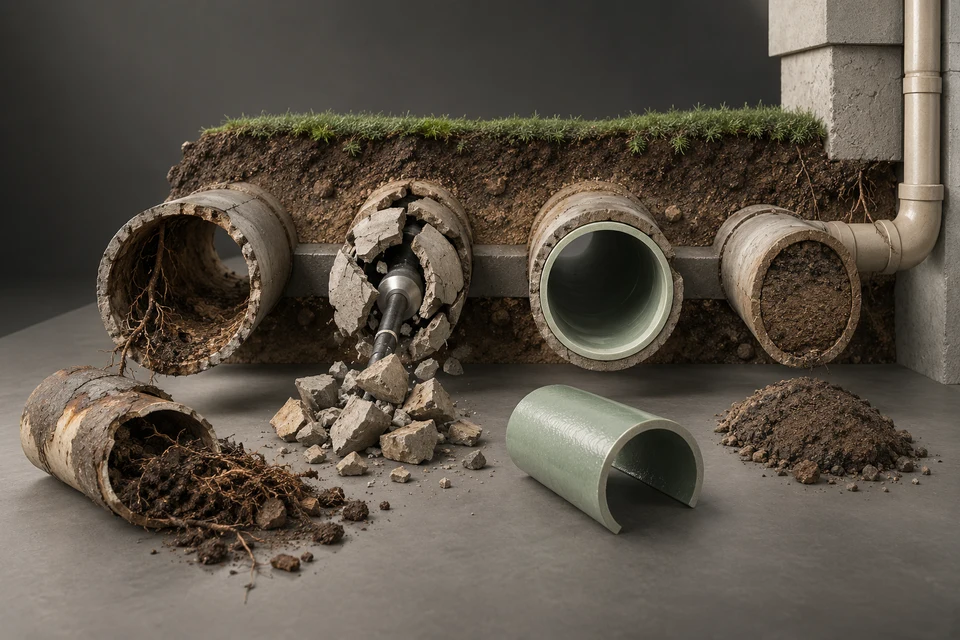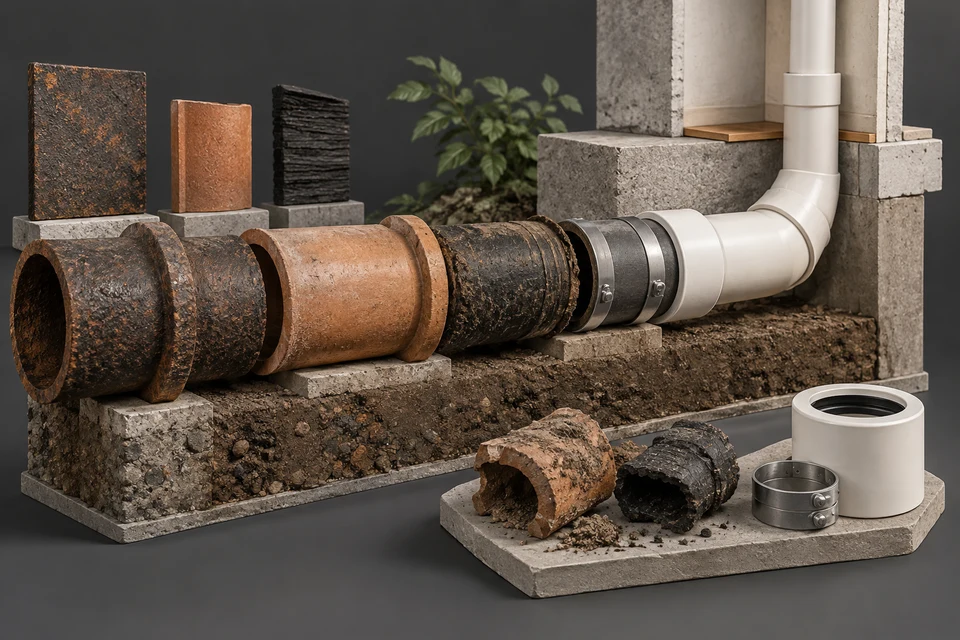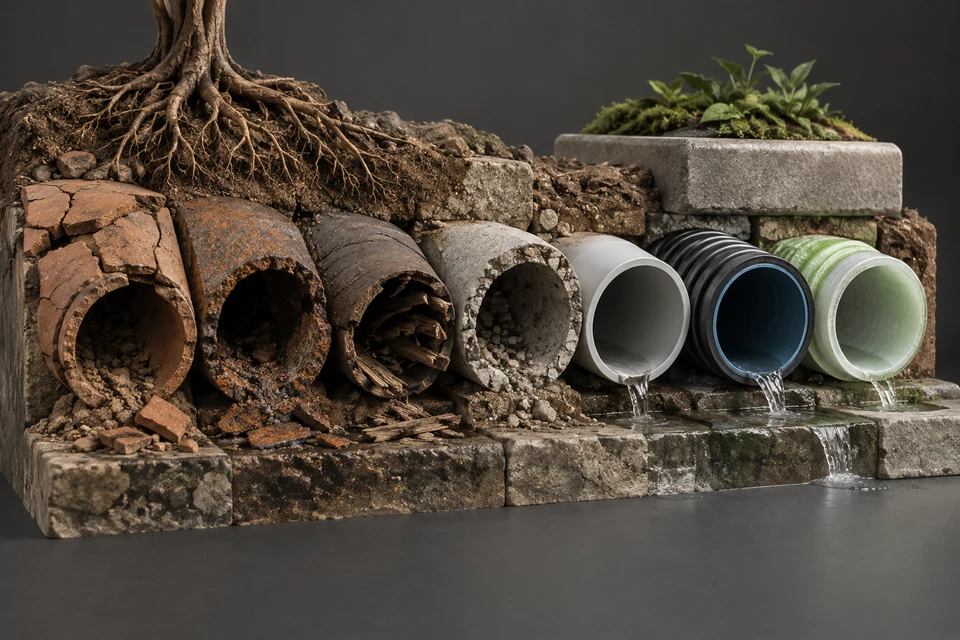
Sewer pipe lifespan depends more on joints, soil and installation than on the material's name. Commonly cited ranges run from roughly 30 to 50 years for bituminous fibre, 50 to 100 years for cast iron, a century or more for the body of clay pipe but far less for its joints, and many decades of design life for PVC, HDPE and CIPP liners.
- Old pipes rarely fail all at once; they fail at their weakest feature, usually the joints.
- Published lifespans are averages under good conditions, not a schedule for your house.
- A recorded camera inspection is the only practical way to judge the remaining life of a specific line.
- Roots, poor bedding, sewer gas corrosion and later digging shorten life more than time does.
- Modern plastic pipe and well-installed liners are designed for many decades, but they have not all been in the ground that long yet.
01 /How long does a sewer line last?
A residential sewer line can last anywhere from a few decades to over a century. The range is wide because 'the pipe' is really three things: the pipe wall, the joints between lengths, and the ground that supports them. Any one of the three can end a line's useful life while the other two are still fine.
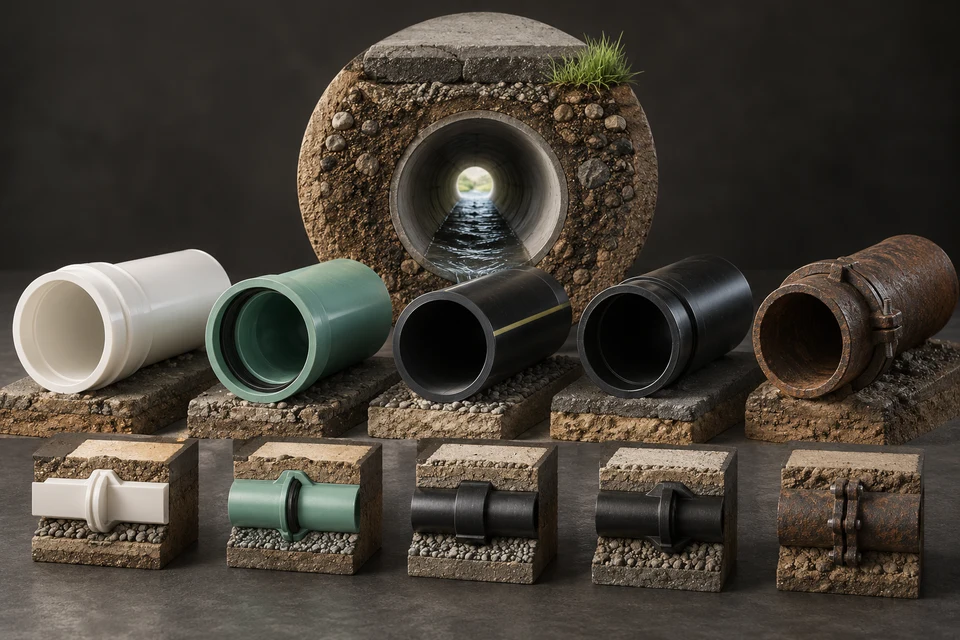
| Material | Commonly cited range | What usually ends its life |
|---|---|---|
| Bituminous fibre (Orangeburg) | About 30 to 50 years | Softening, blistering and flattening under soil load |
| Cast iron | About 50 to 100 years | Internal corrosion and scale, cracks, holes along the bottom |
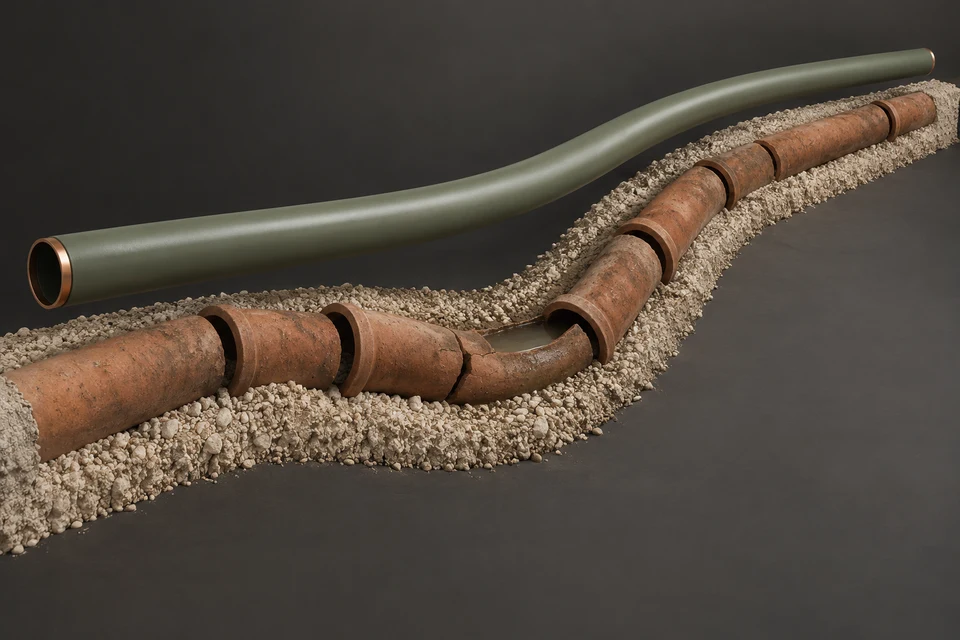
| Vitrified clay | The pipe body can exceed 100 years; joints often fail far sooner | Root intrusion and movement at joints, offsets, breaks |
| Concrete | Varies widely | Surface loss from sewer gas corrosion, joint leaks |
| ABS and PVC | Design lives quoted in many decades, often 50 to 100 years or more | Installation faults, bedding failure, damage from later digging |
| HDPE (fused) | Design lives quoted in many decades | Rarely the pipe; usually a transition or connection |
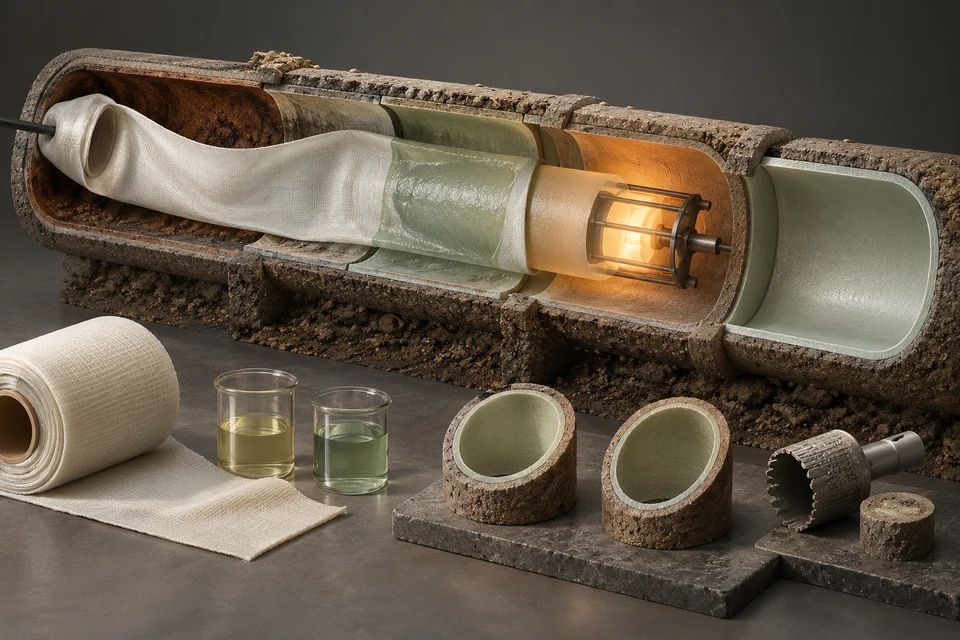
| CIPP liner | Commonly designed around 50 years | Installation defects, end seals, host movement |
02 /How long do the old materials really last?
Each old material has a signature way of failing. Knowing it tells you what to look for on camera and how urgently a finding matters.
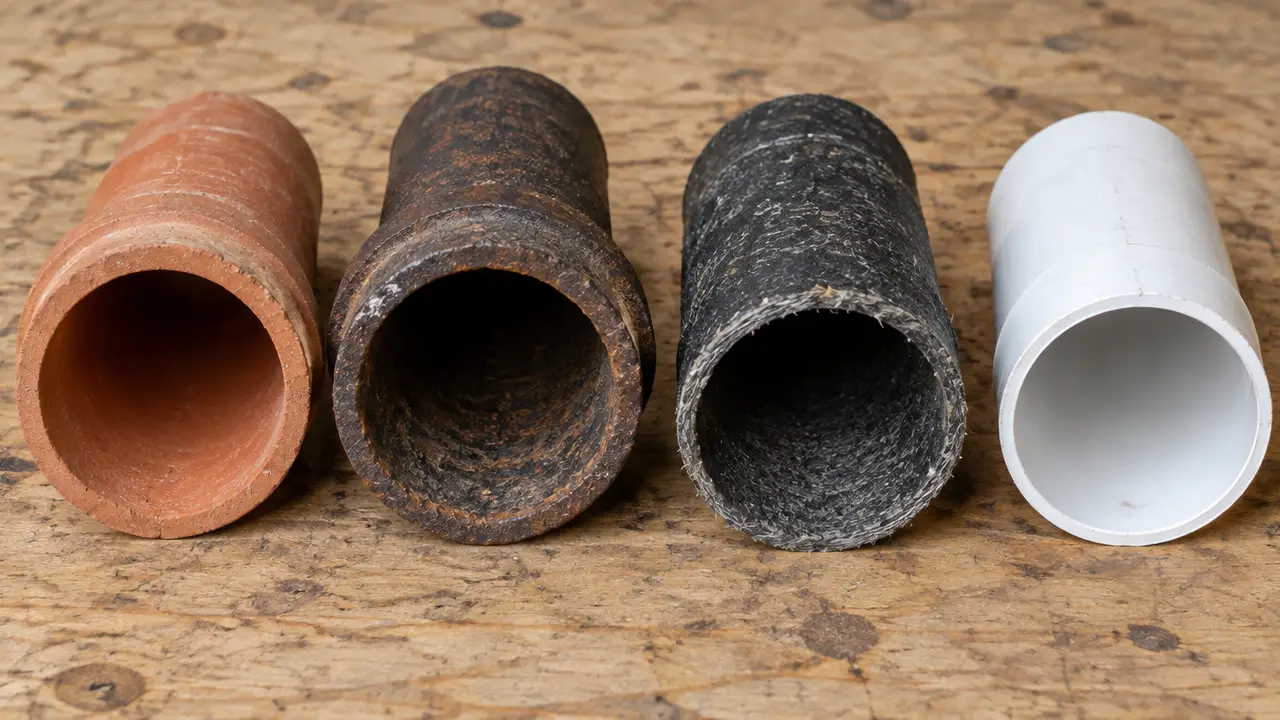
- Vitrified clay is chemically almost inert, so the fired body of the pipe can last a very long time. Its weakness is the joint. Older clay lines were joined with mortar or packed material that cracks and opens as the ground moves, and roots find those gaps within a few decades. A clay line can be 'sound pipe with bad joints' for a long time, which is why relining often suits it.
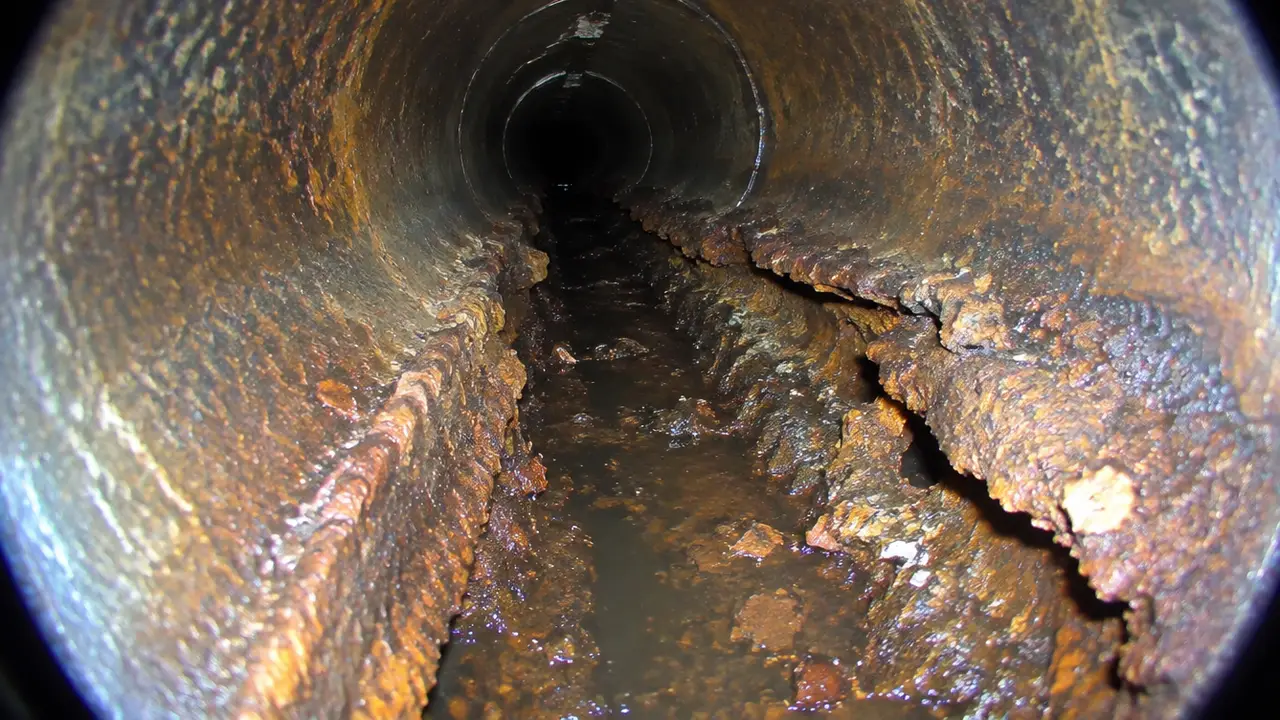
- Cast iron corrodes from the inside. Scale and tubercles build up, and the wall thins, often fastest along the bottom where water runs and along the top where sewer gases condense. Lines last longest where water chemistry is gentle and the soil is dry; they fail faster in wet, aggressive ground.
- Bituminous fibre (Orangeburg) is compressed wood or paper fibre bound with coal tar pitch. It softens with long exposure to water and gradually deforms under the weight of soil, going oval and eventually flat. Deformation is not repairable, which is why the decision engine treats fibre pipe as a replacement case.
- Concrete building sewers are less common in houses. The main threat is hydrogen sulphide gas turning to acid above the waterline and eating the pipe surface.
Material by era is only a guide. Many older houses have mixed lines, with an original clay run in the yard, a cast iron building drain under the slab, and a later PVC repair section somewhere in between. The camera footage should record every material change and its distance, and replacing cast iron, clay and Orangeburg pipe explains how each material narrows the choice of method.
03 /How long do replacement pipes and liners last?
New plastic pipe and structural liners are designed for long service, commonly quoted at 50 years or more, and PVC and HDPE sewer pipe are often described with even longer design lives. None of these figures is a promise. They assume correct installation, and the oldest residential installations are younger than the design lives being quoted.
So how long does trenchless sewer repair last? A burst replacement is a new HDPE pipe and should be expected to last like one. A liner's life depends on how well it was prepared, cured and sealed. CIPP lining explained covers the quality points that decide it.
04 /What shortens the life of a sewer line?
Most sewer lines that fail early are killed by their surroundings or their installation, not by the calendar. The same pipe can last three times as long in one yard as in the next.
| Factor | Effect | Can you influence it? |
|---|---|---|
| Tree roots near open joints | Roots enter, expand joints, crack pipe | Yes: sealed or lined joints, planting distances |
| Poor bedding or loose backfill | Sags and cracked joints | Only at installation |
| Wet, soft or shifting soil | Movement, offsets and sags | Drainage and careful installation help |
| Sewer gas corrosion | Wall loss in cast iron and concrete | Good venting and flow limit it |
| Heavy surface loads over shallow pipe | Cracking and deflection | Keep heavy vehicles off shallow lines |
| Later excavation nearby | Undermining or direct strikes | Locate before digging, including private lines |
| Harsh chemical drain cleaners | Can attack old metal and some joints | Yes: avoid them |
| Grease and wipes | Chronic blockages and aggressive cleaning | Yes: keep them out of drains |
Tree roots are the single most common life-shortener for clay and concrete lines. For species and planting distances, see SewerRoots.ca.
05 /How do you judge the remaining life of your own line?
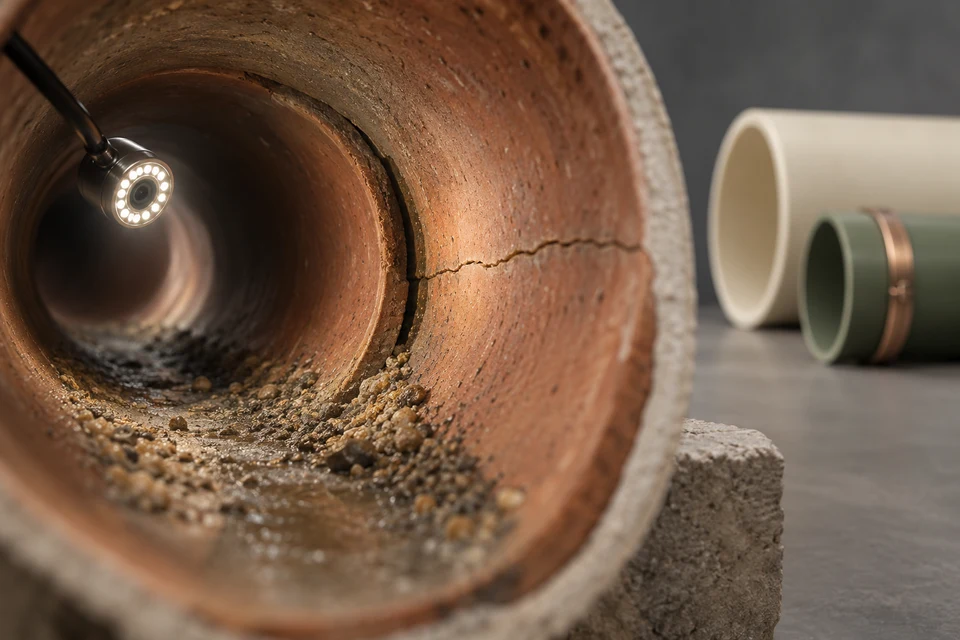
You judge it from a recorded camera inspection, preferably graded with a recognised coding system and compared against earlier recordings. The question is not 'how old is it?' but 'how many defects, of what kind, and are they getting worse?'
- Establish the material and changes
The inspection should note each material and where it changes, measured from the access point.
- Count structural defects
Cracks, fractures, holes, deformation, offsets, separated joints and sags. Their number and spread are the core of the assessment.
- Note the trend
If you have an older video, compare the same distances. Growing cracks, new offsets or deepening sags mean the line is moving.
- Weigh the material's weak point
Clay with many root-entry joints, cast iron thinning at the bottom, or any fibre pipe changes how much life is left even if nothing has failed yet.
- Apply the age convention
Lines of 70 years or more are widely treated as having limited remaining life even when they look acceptable, which is exactly the note the decision engine adds for that age band.
A condition grade from a certified inspector, such as a grade under the NASSCO lateral coding system, gives you a consistent language for this, but the decision still comes down to the pattern of defects. SewerInspector.ca explains how inspection reports and grades are built.
06 /How often should a sewer line be replaced?
Only when it needs to be. There is no maintenance interval for replacing a sewer line the way there is for a furnace filter. Many owners will never replace a modern PVC lateral, while a house with a bituminous fibre line may need one replaced within a single ownership.
- Replace on evidence: structural failure on video, especially repeated along the line.
- Replace on opportunity: before new driveways, basement finishing or major landscaping over an old line.
- Replace on risk: lines of 70 years or more with known weak materials, when a repair is being considered anyway.
- Do not replace on age alone when footage shows sound pipe with tight joints.
When the evidence points toward replacement, when to replace a sewer line walks through the thresholds, and best pipe for sewer replacement covers what to put back. If you already have footage, request quotes on it.
FAQQuestions people ask
What is the typical service life of clay sewer pipe?
The fired clay itself is very durable and can last a century or more. The joints are the weak point; older mortar or packed joints open up and admit roots within decades, which is usually what ends a clay line's useful life.
What is the usual lifespan of a cast iron sewer line?
Commonly cited ranges are around 50 to 100 years, but corrosion from the inside, soil conditions and water chemistry vary widely. A camera inspection shows how much wall and bore remain.
How long does Orangeburg pipe last?
Bituminous fibre pipe is commonly cited as lasting roughly 30 to 50 years before it deforms under soil load. Any fibre pipe still in service is generally treated as a replacement candidate.
How long will a cured-in-place liner last?
Pipe bursting installs new HDPE pipe, which has a long design life. CIPP liners are commonly designed around 50 years. Installation quality determines the real life of either.
How long does PVC sewer pipe last?
PVC sewer pipe does not corrode and is quoted with design lives of many decades. Most PVC failures come from installation problems such as poor bedding or unseated joints, or from later digging.
NETWORKGo deeper across the HAUSE Sewer network
Sewer pipe materials by construction era, and what each looks like on camera
Sewer pipe materials by era in Canadian homes: clay, cast iron, Orangeburg, concrete, ABS and PVC, how each one fails and what it looks like on camera.
PipeCleaning.caHow long cast iron drain pipes last, and when to repair, line or replace
How long do cast iron drain pipes last? Why they rust and crack, how to judge remaining life, and when a repair sleeve, lining or replacement is right.
SewerRoots.caRoots in clay and concrete sewer pipe: why older neighbourhoods suffer most
Why roots invade clay and concrete sewer pipe in older Canadian neighbourhoods: joint spacing, mortar and jute seals, mature trees, and how to plan repairs.