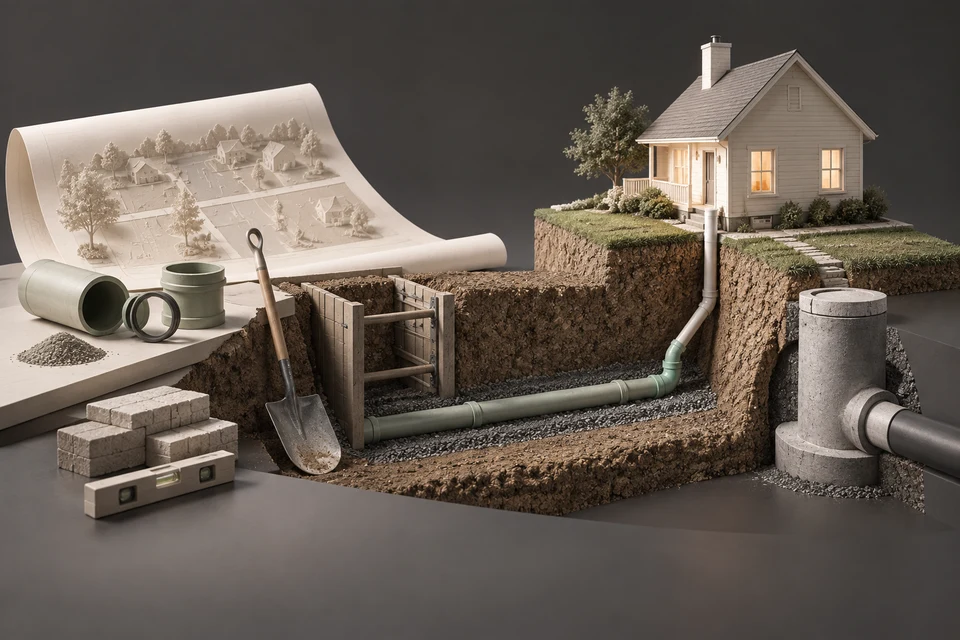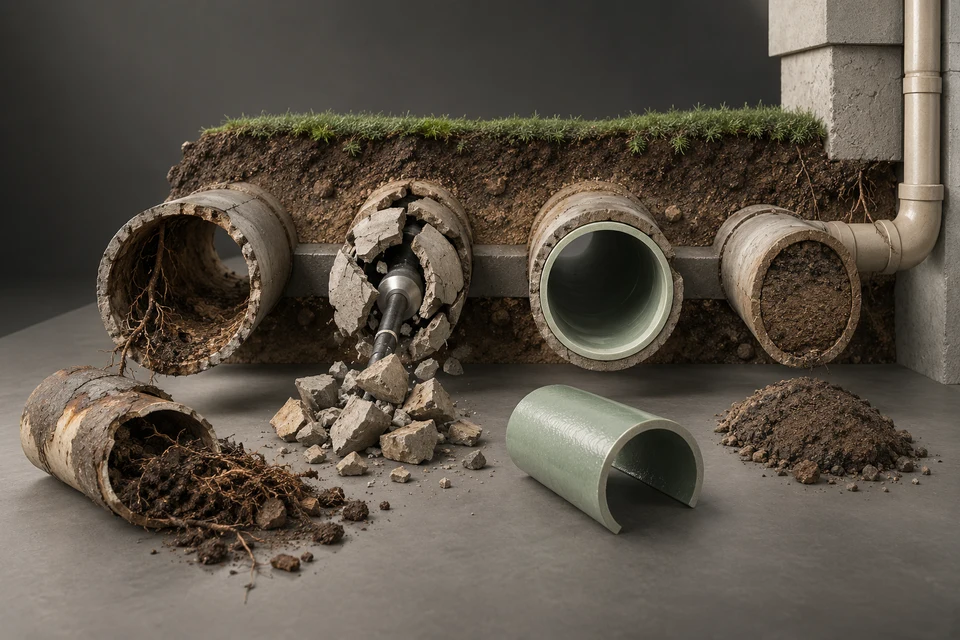
It depends on the method. Open cut removes the old pipe for disposal. Lining keeps it in place as the host around the new liner. Bursting leaves it broken into fragments in the soil around the new pipe. When a line is rerouted, the old one is abandoned: disconnected, capped or plugged at both ends and sometimes filled with grout, after every connection to it has been traced.
- An old line that is abandoned must be disconnected from the municipal system as the municipality requires, not just left open.
- Before abandoning any pipe, prove that nothing still drains into it, including floor drains, weeping tile and outbuildings.
- Cast iron is usually recyclable as scrap; clay, concrete and fibre go to disposal.
- Asbestos-cement pipe and lead-caulked joints need special handling.
- Record where the old line and its caps are, so future diggers are not surprised.
01 /What happens to the old pipe with each replacement method?
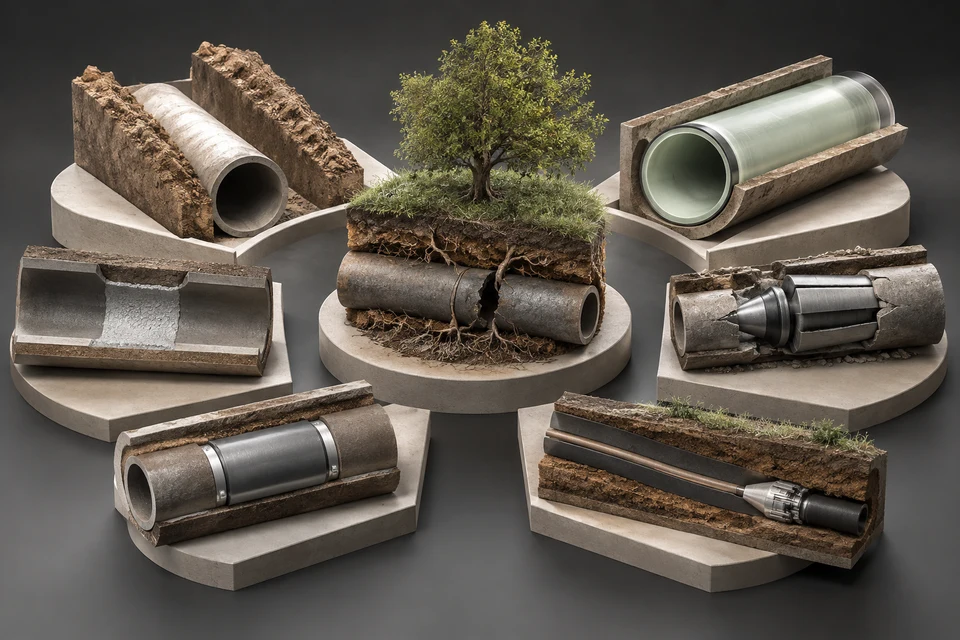
Each method treats the old pipe differently, and the difference affects what is left in your yard, what has to be hauled away, and what a future contractor will find.
| Method | What happens to the old pipe | What stays in the ground |
|---|---|---|
| Open cut | Dug out along the trench | Nothing along the replaced length |
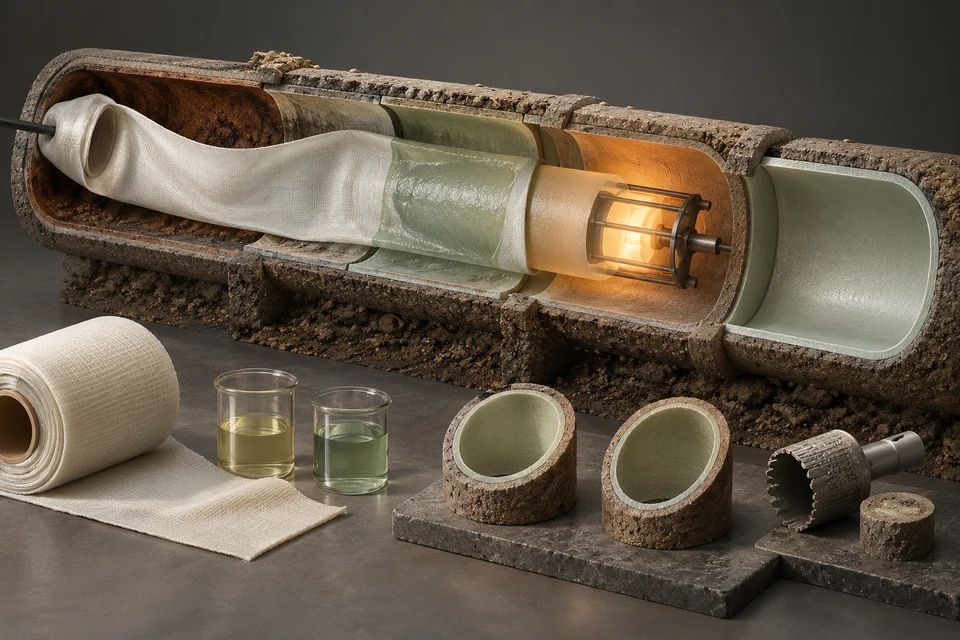
| Full-length lining (CIPP) | Cleaned and left as the host | The old pipe, with the liner inside it |
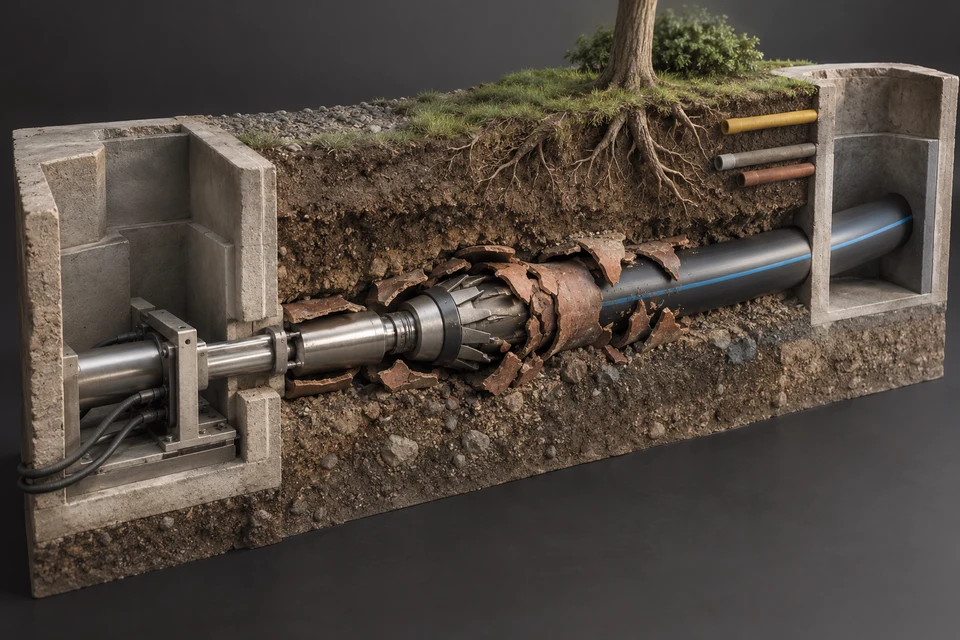
| Pipe bursting | Fractured and pushed into the surrounding soil | Fragments around the new pipe |
| Spot repair | The damaged section is cut out | The rest of the old line, still in service |
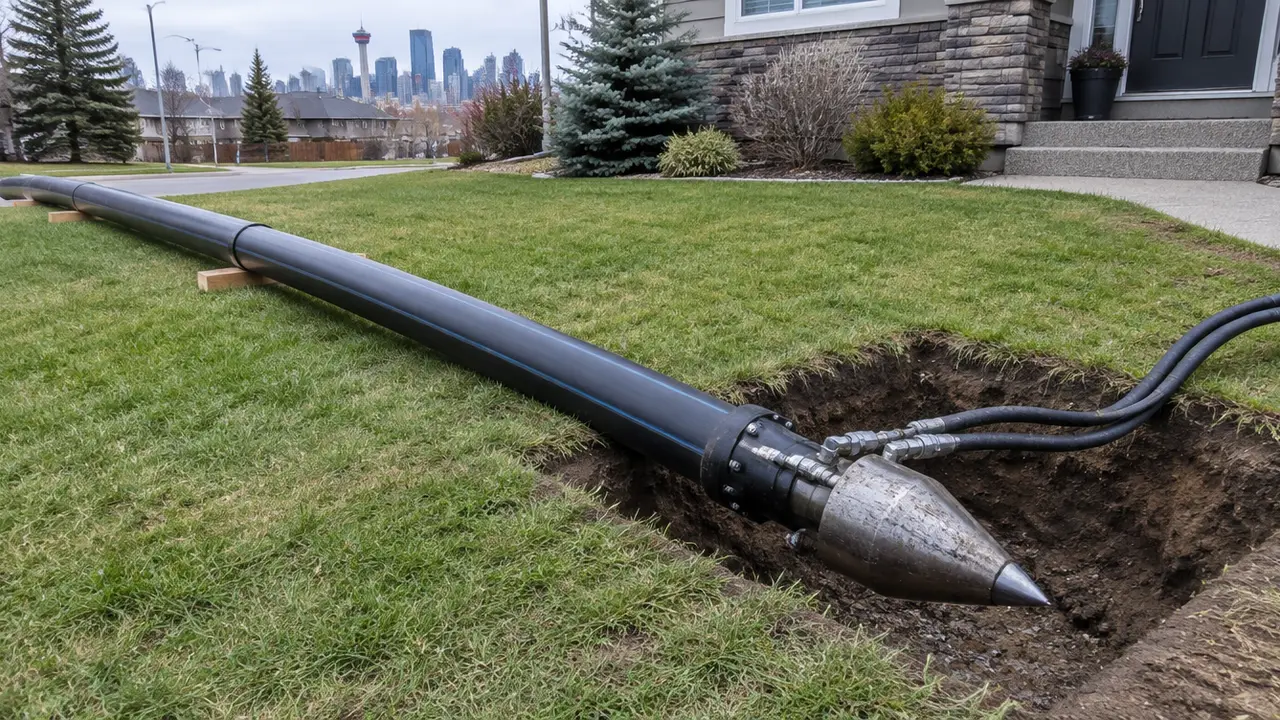
| New route (open cut or boring) | Left in place and abandoned | The old line, disconnected and capped |
None of these is a problem in itself. The question is whether whatever stays behind is sealed, recorded and unable to cause trouble, such as a void, a hidden connection or a path for water.
02 /How is removed pipe disposed of?
Removed pipe is sorted by material and hauled away by the contractor, usually as part of the job. The material decides where it goes.
| Material | Usual route | Handling notes |
|---|---|---|
| Cast iron | Scrap metal recycling | Joints may contain lead; see below |
| Vitrified clay | Landfill or inert-material disposal | Heavy; sharp edges |
| Concrete | Landfill or concrete recycling where accepted | Heavy |
| Bituminous fibre (Orangeburg) | Landfill | Contains coal tar pitch; do not burn |
| ABS and PVC | Landfill in most areas | Do not burn |
| Asbestos-cement (transite) | Regulated asbestos disposal | Handled only under asbestos procedures |
Ask the contractor whether haul-away and disposal are included in the quote. It usually is for open cut, but it is worth confirming, especially for asbestos-cement or large volumes of soil.
03 /What about asbestos-cement pipe and lead joints?
Asbestos-cement pipe, sometimes called transite, was used for some sewer and water lines in the mid-twentieth century. Intact, it is stable. Cut, broken or ground, it can release asbestos fibres. Cast iron drain joints were traditionally packed with oakum and sealed with poured lead, which becomes a lead exposure risk when the joints are cut or melted.
These materials also matter for trenchless choices. Bursting asbestos-cement pipe leaves fragments in the ground, and some regulators and owners prefer that such pipe be removed or left intact and lined instead. Ask the contractor how they will handle it and what the provincial rules require.
04 /What does it mean to abandon an old sewer line?
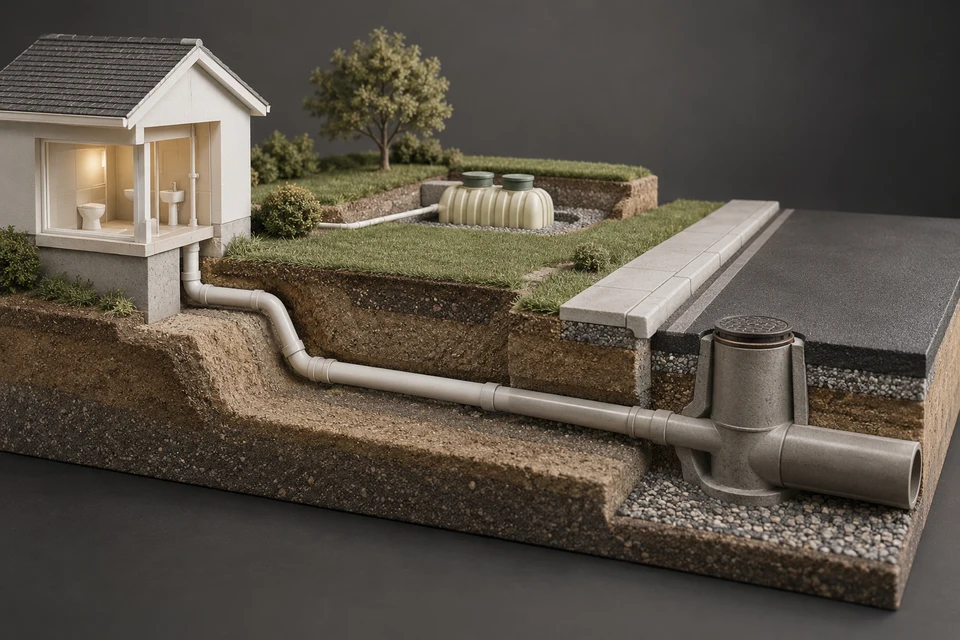
Abandoning a line means taking it permanently out of service and leaving it in the ground. It happens when a new lateral is laid along a different route, when a house is demolished, or when two old connections are consolidated into one. A properly abandoned line is disconnected, sealed at both ends, and recorded.
- Trace every connection
Camera the old line and dye-test fixtures and drains to prove nothing still flows into it. Floor drains, laundry tubs, garage drains and outbuildings are common surprises.
- Disconnect at the municipal end
Municipalities usually specify how a service is disconnected, such as capping at the property line or at the main, and whether their crews must do it. Confirm before work starts.
- Seal the house end
Cap or plug the old pipe where it leaves the foundation so groundwater and sewer gas cannot travel along it.
- Fill where needed
Large or shallow pipes, or those under structures and driveways, are sometimes filled with grout or flowable fill so they cannot collapse later and leave a void.
- Record it
Mark the old route, the cap locations and the fill on the as-built sketch.
05 /Why does it matter if something still drains into the old line?
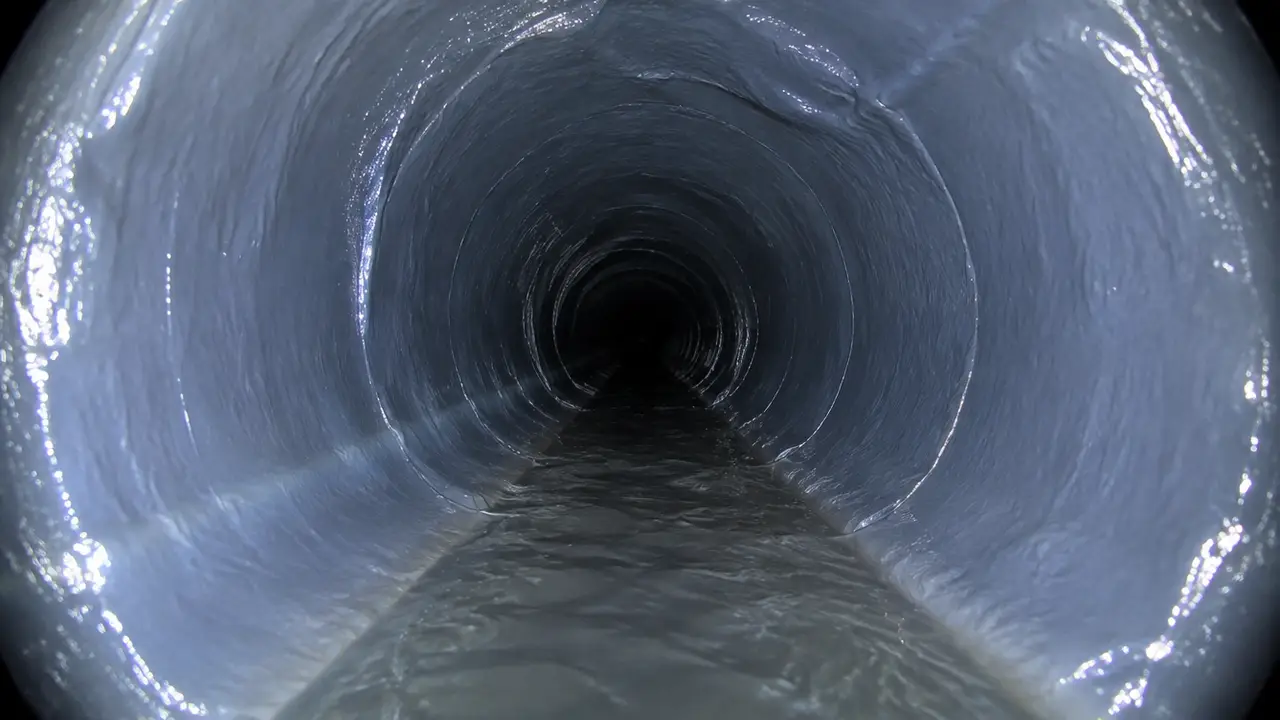
Because an overlooked connection turns an abandoned pipe into a hidden cesspit or a leak. Older houses often have drains that joined the lateral outside the foundation, such as a separate garage or carriage-house drain, or foundation drains connected to the sanitary line.
- Foundation drains (weeping tile): in some older homes these were connected to the sanitary sewer. Many municipalities now restrict or prohibit that. If the old lateral carried weeping tile flow, the new arrangement has to meet current local rules, which may mean a sump.
- Second building drains: houses with additions sometimes have a second drain leaving the foundation at another point.
- Outbuildings and suites: a garage suite or workshop may tie into the old lateral in the yard.
- Roof drains or area drains: some older properties have storm connections to the sanitary line that are no longer permitted.
A camera run with a locator, plus a dye test of each suspect drain, is the standard way to find these before the old line is capped. If you discover a connection that current rules do not allow, ask the municipality how it should be corrected.
06 /Do fragments left by bursting cause problems?
Usually not. The bursting head's expander is larger than the new pipe, so fragments are pushed out into the soil and leave a clear annulus for the new HDPE, which is tough enough to resist the fragments around it. The fragments become part of the backfill.
The situations to discuss with the contractor are specific ones: sharp cast iron fragments near a thin-walled new pipe, fragments of asbestos-cement pipe, and shallow lines where displaced material causes surface heave. Pipe bursting explained covers how contractors manage each.
07 /What does a liner mean for the old pipe?
With a full-length liner, the old pipe stays exactly where it was and becomes a protective shell around the new one. In a partially deteriorated design, the old pipe still carries soil loads; in a fully deteriorated design, the liner is built to stand on its own. Either way, the old pipe is now part of the system, so what it is made of still matters.
- The liner seals the old joints, but the old pipe's ends are transitions where water or roots may track along the outside unless they are sealed.
- A future spot repair on a lined line means cutting through both the old pipe and the liner, and the coupling has to suit that combination.
- The as-built record should state that the line is lined, with the liner system, so the next contractor knows what they are cutting into.
For more on how liners and hosts work together, see CIPP lining explained. When you get quotes, ask each contractor what will happen to the old pipe, whether disposal is included, and how any abandoned section will be sealed. Request quotes with that question written into your scope.
FAQQuestions people ask
Is the old sewer pipe removed during trenchless replacement?
No. With lining, the old pipe stays as the host around the new liner. With bursting, it is broken into fragments that stay in the soil around the new pipe. Only open cut removes it.
Can an old sewer line be left in the ground?
Yes, if it is properly abandoned: disconnected as the municipality requires, sealed at both ends, sometimes filled with grout, and recorded. It should never be left open or still connected.
What do contractors do with old cast iron sewer pipe?
It is usually hauled away and recycled as scrap metal. Lead-caulked joints need care when cut, and disposal should follow local rules.
What if the old pipe is asbestos-cement?
Have it identified and handled by workers trained in asbestos procedures, following provincial rules. Do not cut, break or grind it yourself.
Why test the old line before abandoning it?
To prove nothing still drains into it. Floor drains, outbuildings, second building drains and foundation drains sometimes connect to the old lateral, and capping it would cause backups or leaks.
Do I need a permit to abandon an old sewer line?
Often, yes, especially where the old line is disconnected from the municipal system. Municipalities usually set how and where a service is capped and may require an inspection or do the disconnection themselves. Ask before the new line is connected.
Can an abandoned sewer line cause problems later?
It can if it is left open or unfilled. An open pipe can carry groundwater toward the foundation or let soil wash in and leave a void. Capping both ends, filling large or shallow sections, and recording the route prevents most of this.
NETWORKGo deeper across the HAUSE Sewer network
What pipe do I have? Identify your drain pipe material
What pipe do I have? Identify a drain pipe from its look, joints, markings and house age, with a confidence rating, safe cleaning methods and camera advice.
SewerInspector.caSewer pipe materials by construction era, and what each looks like on camera
Sewer pipe materials by era in Canadian homes: clay, cast iron, Orangeburg, concrete, ABS and PVC, how each one fails and what it looks like on camera.
SewerJetting.caHydro jetting weeping tile: how foundation drains are cleaned, and when they cannot be
Hydro jetting weeping tile explained: how foundation drains clog with silt, roots and iron ochre, how they are jetted from the sump, and when to replace them.